Financing Motorhomes and Keeping Freedom Affordable
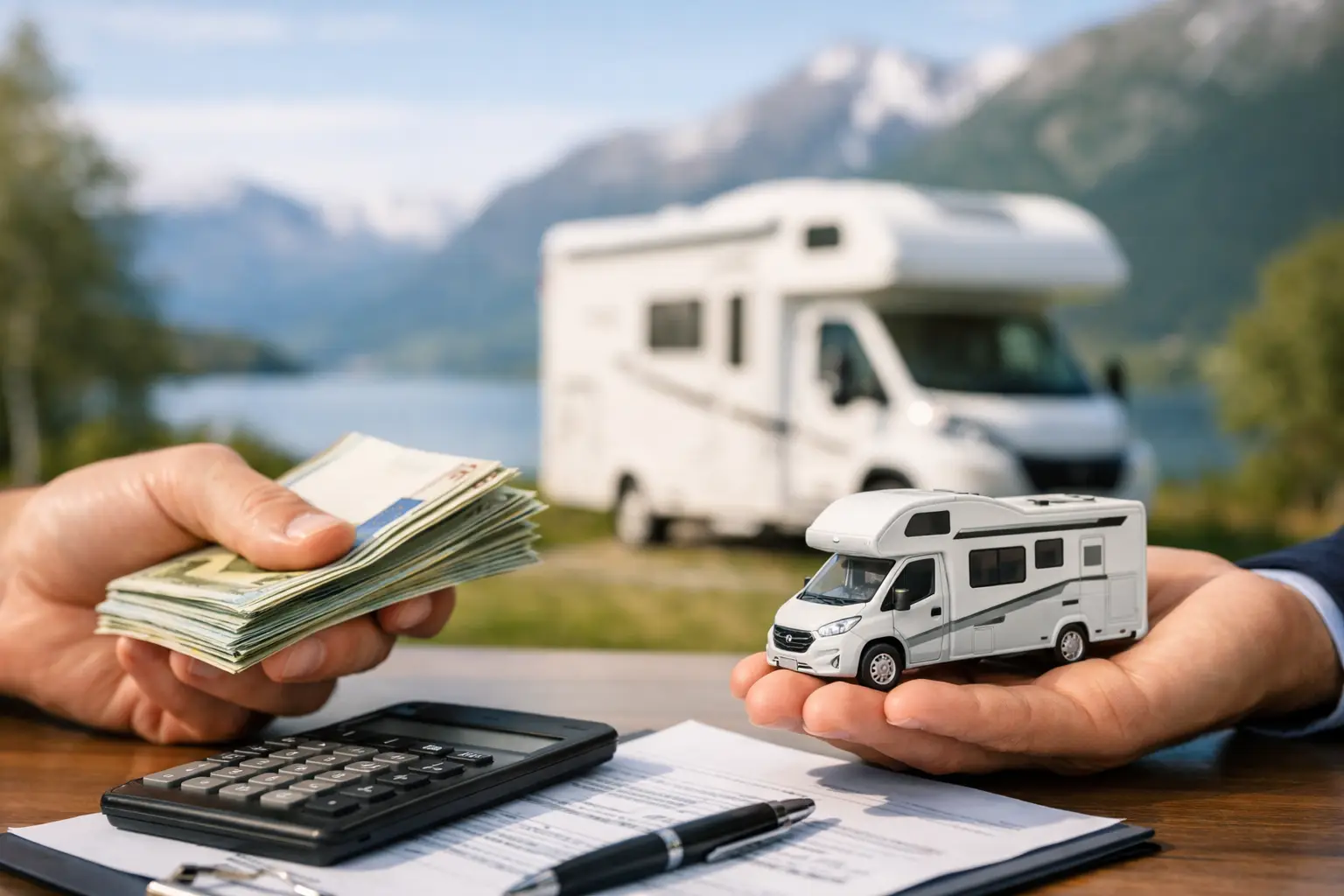
The dream of owning your own motorhome often begins with a very specific vehicle: enough berths for the family, a bathroom for relaxed stages, room for the dog or a compact panel van for two. But before your first trip to the coast or the Alps starts, the question of budget arises. Financing motorhomes means planning the monthly payment so that the freedom of travel is a pleasure – and does not become constant financial stress.
A motorhome is more than a means of getting around. It is holiday accommodation, a retreat and a companion for many years. That is why it pays to look at more than the purchase price. If you calculate the payment, term, equity and running costs honestly, you make the better decision – one that suits your own travel routine.
Financing motorhomes: first determine the overall budget
The monthly finance payment is only one part of the costs. On top of the motorhome come insurance, tax, maintenance, tyres, gas inspection, a pitch or storage, and accessories. Depending on the vehicle and use, inspections, repairs or retrofits can also weigh in. With used vehicles in particular, a small buffer for unexpected expenses makes sense.
A good starting point is a simple calculation: what realistically remains each month after all fixed living costs? Not all of that amount should go into the loan payment. If you leave room for holidays, fuel, campsites and spontaneous workshop appointments, you travel far more relaxed.
As a guide, a payment can be right if it still feels comfortable even when your next holiday is not coming up immediately. Because in some months a motorhome stands still more than it drives. The financing keeps running anyway. So plan conservatively rather than too tightly.
Do not look at the purchase price in isolation
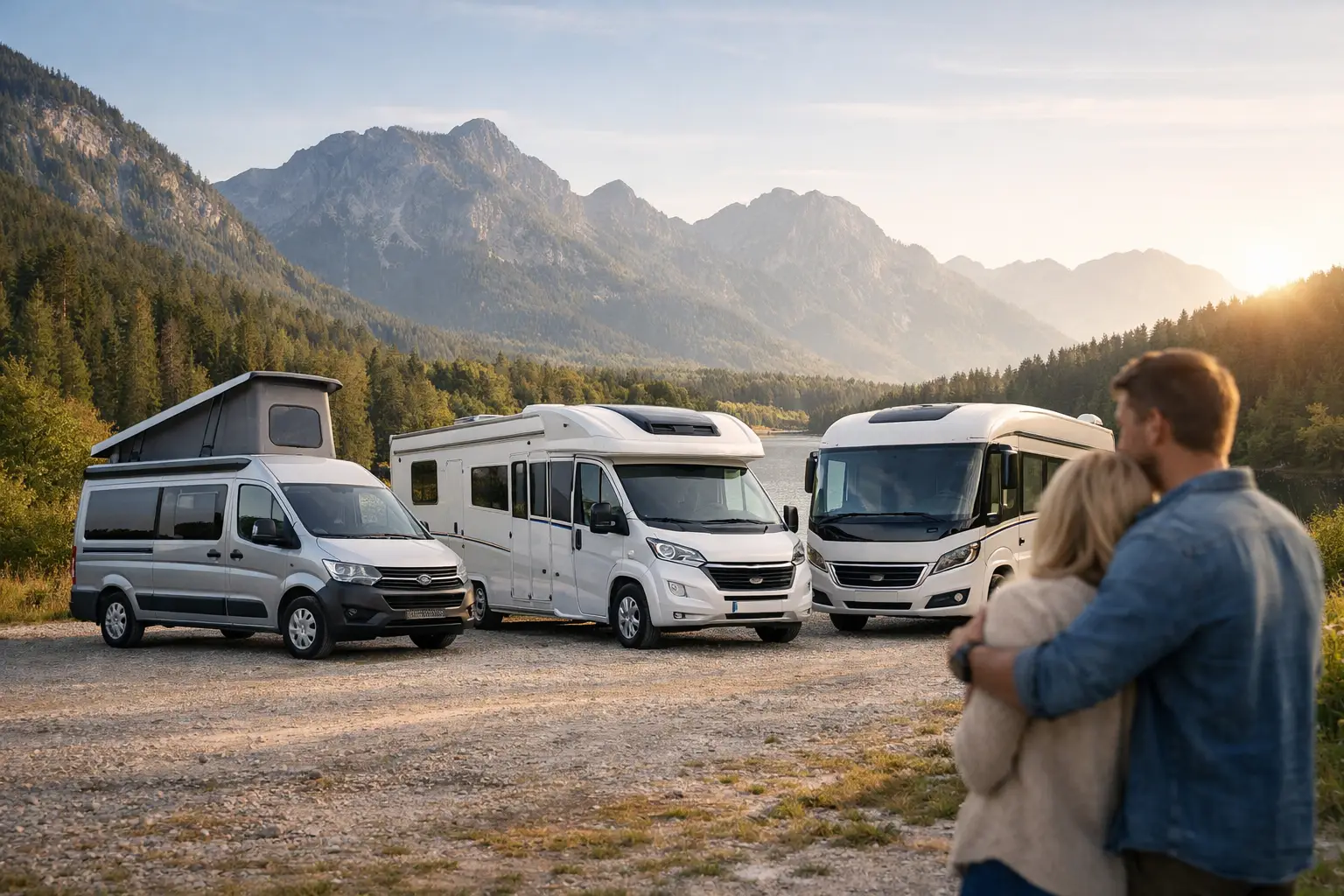
A low purchase price is not automatically the cheapest decision. A very old vehicle can cost more in maintenance, consumption or repairs than a younger, well-kept model. Conversely, it does not always have to be the biggest and most expensive motorhome. A panel van can be just right for couples or weekend trips, while families often benefit from a semi-integrated model with more storage space and fixed berths.
What matters is how you actually want to travel. If you are on the road for many weeks a year, you often value living comfort, self-sufficiency and storage space more. For short breaks, a more compact model can be the more economical choice. Personal vehicle advice helps to base equipment and layout on your own needs rather than the brochure.
Equity lowers the payment and interest costs
The more equity you put in, the less money has to be financed. That usually lowers the monthly payment and the total interest costs. In addition, a high residual debt is less often left over when you sell later. As a rough rule of thumb, an own contribution of 10 to 30 percent can make sense – provided a financial reserve remains afterwards.
It would be unwise, however, to put all your savings into the deposit. A motorhome needs care, and unexpected expenses can also arise in private life. A balanced ratio is better: a solid deposit, an affordable payment and enough money put by.
With a checked used motorhome, your existing budget can often stretch further than with a new vehicle. At the same time, you should examine the condition, maintenance history, watertightness and technical equipment closely. If you rely on traceable documents and expert support here, you reduce the risk of expensive surprises after the purchase.
The right term is a compromise
A longer term makes the monthly payment smaller. That can be attractive, especially if you do not want to burden your holiday budget too much. In return, you generally pay more interest over the whole period. A short term saves interest costs, but requires a much higher monthly payment.
For many buyers, a medium term is the sensible path. It keeps the payment manageable without carrying the loan for unnecessarily long. What matters is that the term suits the age and expected depreciation of the vehicle. A ten-year-old campervan should not still be fully financed for many years if larger repairs become more likely in that time.
Also check whether special repayments are possible. If money from a bonus, inheritance or vehicle sale becomes available later, you can reduce the residual debt faster. Flexibility costs a little more with some offers, but can be very valuable.
Loan with or without a final instalment?
With a classic instalment loan, you pay a fixed amount month by month until the loan is repaid in full. The model is clearly calculable and easy for many private buyers to understand. With financing that has a high final instalment, the monthly payments are lower at first, but a larger sum remains open at the end.
That can suit you if you can plan confidently to pay the final instalment from savings or to sell the vehicle then. But it carries a risk: if the sale price turns out lower than expected, residual debt can remain. With leisure vehicles in particular, whose value depends on care, mileage, season and market conditions, the final instalment should not be set too optimistically.
Leasing is also sometimes offered in the private sector. It can make sense if you want to drive a new vehicle regularly and the contract terms suit your usage exactly. If you want to keep your motorhome long term, fit it out individually or resell it freely, you are often better off with a purchase and suitable financing.
Compare offers properly
The advertised payment alone is not decisive. Compare the effective annual interest rate, the total of all payments, any processing or brokerage costs and the terms for special repayments. Also check whether payment protection insurance is offered as compulsory or only optional. It can make sense in individual life situations, but increases the total cost and should never be signed along with the rest unchecked.
Ask for a complete repayment schedule. From it you can see how interest and repayment develop and what residual debt remains at a given point in time. That is particularly helpful if you might want to swap your motorhome for another model after a few years.
Avoid choosing a loan only by the lowest payment. A low payment can result from a long term, a high final instalment or additional costs. Transparency is worth more here than a particularly shiny advertising promise.
Align the financing with the vehicle purchase
Financing is easier when vehicle, budget and use fit together. Do not buy as much equipment as possible on spec, but prioritise what really makes your trips more pleasant. An awning, solar system, bicycle carrier or a better battery can in part also be professionally retrofitted later. That way the purchase price stays manageable at first, without you having to give up your wishes permanently.
Beginners in particular benefit from getting to know different layouts and vehicle classes before buying. Renting can be a good aid to deciding: is the storage space enough? Does the bed work day to day? How does a semi-integrated model drive over longer distances? These experiences are often more telling than any vehicle description.
At Friedas Camper in Kempen, purchase, personal advice and technical service can sensibly be thought of together. That is practical if you are looking not only for a suitable motorhome, but also want a reliable contact for servicing, repairs or retrofits after the purchase.
Before you sign: answer these questions honestly
Before concluding the contract, you should be able to answer four points clearly: what is the full purchase price including necessary accessories? Which payment stays comfortably affordable even in quieter months? How much equity can you put in without giving up your reserve? And what happens if you want to sell the vehicle before the end of the term?
Once these answers are in place, financing becomes a plan you can follow. Take your time to compare and do not let yourself be pushed into equipment or a payment that does not feel right. The right motorhome should give you freedom – not new worries every month.
The most beautiful route does not begin at the motorway slip road. It begins with a decision that suits your life. When payment, vehicle and service are right, there is more energy left for what camping is really about: setting off, arriving and enjoying your time on the road.