
Panel Van or Semi-Integrated – Which Suits You?
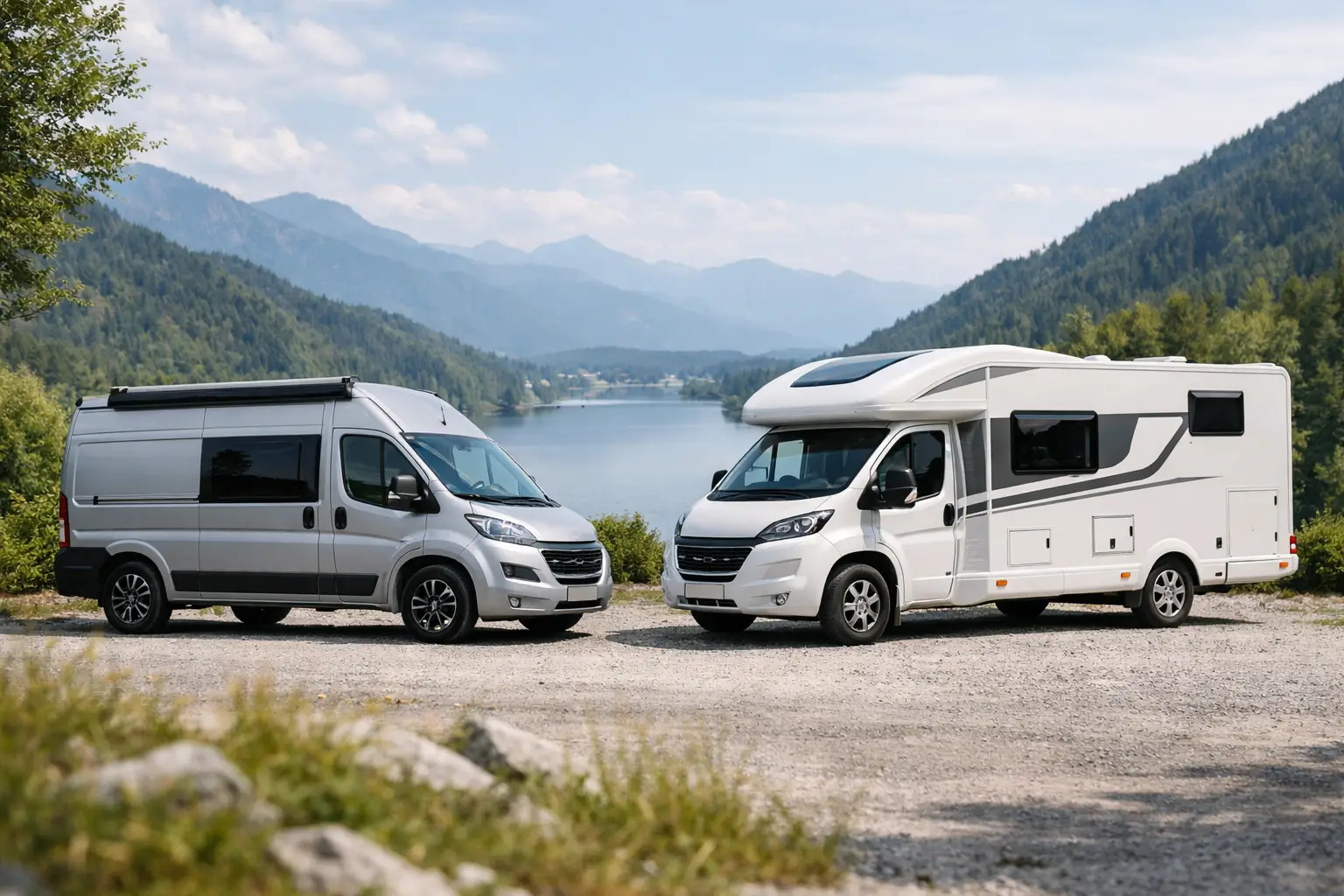
The pitch is narrow, the street in the old town even narrower – and that is exactly when the question "panel van or semi-integrated?" becomes a decision that shapes your holiday. Both types of motorhome bring freedom on wheels, but they feel clearly different in everyday use and on the road. If you look not just at the layout but at your own habits, you will find the right vehicle faster.
A panel van scores with compact dimensions and a car-like driving feel. A semi-integrated often offers more living space, storage and comfort for longer trips. The right choice therefore depends less on the nice photo in the brochure than on the question: how, and with whom, do you want to travel?
Panel van or semi-integrated: the difference at a glance
A panel van is based on a van. The original vehicle is converted into a camper – with kitchen, bathroom, beds, heating and, depending on the model, a surprisingly generous living area. Its external width usually remains manageable, and the vehicle length is often between about 5.40 and 6.40 metres.
The semi-integrated, by contrast, has a separate living structure behind the cab. There is no large overcab bed above the cockpit, so the overall height stays relatively moderate. At the same time, the body is wider than a panel van's and creates more freedom of movement inside. Typical lengths range from around six to over seven metres.
In practice, that means: the panel van is closer to a conventional vehicle, the semi-integrated closer to a mobile home. Neither is better in principle. It depends on what matters more on your ideal route – straightforward driving or generous living comfort.
When driving enjoyment and everyday practicality count: the panel van
If you often set off spontaneously, like small campsites or travel on narrow roads, you will often feel at home in a panel van quickly. In many situations it is more relaxed to manoeuvre, fits more easily into normal parking spaces and feels more familiar to drive than a wider motorhome. Beginners in particular appreciate this direct driving feel.
A panel van is also attractive as a second vehicle or for weekend trips. After work to the Niederrhein, a long weekend in the Eifel or to the North Sea with the dog – you don't necessarily need a large motorhome for that. Many models have everything on board that two people need for comfortable days: a fixed bed at the rear, a compact kitchen, a bathroom and enough storage for the essentials.
The compact design does call for compromises, though. In rain or on longer stays, you notice the smaller interior. When one person is cooking, the other getting dressed and the dog also wants to stay dry, it quickly gets tighter. The washroom is usually functional but smaller, too. Families with children should check carefully whether the beds, seating area and storage really suit their travel routine.
Who the panel van suits particularly well
Couples, solo travellers and active campers often make a very good choice with a panel van. That applies especially if drives on country roads, city trips, changing overnight spots or short trips are at the top of your list. If you live mostly outdoors, hike, cycle or eat out on the road, you often don't miss the larger living space.
Another point is the season. In summer the compact size plays to its strengths, because life takes place outside the vehicle anyway. For winter trips or long stays in changeable weather, a carefully planned layout with good heating, insulation and enough seating can matter more than the vehicle class alone.
More room for longer trips: the semi-integrated
For many campers, the semi-integrated is the pleasant middle way between agility and living comfort. The wider body creates noticeably more space in the living area. Seating areas are more generous, kitchens often offer more worktop and cupboards, and the beds are more comfortable. A layout with better separation of spaces is often included too.
This is especially noticeable when you are on the road for several weeks . Clothes, camping furniture, supplies, e-bikes or dog accessories all need their place. In a spacious rear garage, many things can be stowed securely without cluttering the living area. If you travel with children, depending on the layout you benefit from single beds, an additional drop-down bed or a larger dinette.
In bad weather, the semi-integrated is more relaxed too. You can sit at the table, read, work or eat together without constantly having to rearrange things. For travellers who don't change location every evening and want to use their camper as a place to retreat, this is a real gain in comfort.
In return, the vehicle demands a little more attention when driving. Width, length and height are felt more on narrow village roads, small ferries or full car parks. That is not a deal-breaker – with a little practice, modern semi-integrated motorhomes drive very pleasantly. But if you want to get into the city, to remote pitches or through narrow coastal towns as simply as possible, you should assess the dimensions realistically before deciding.
Who benefits from a semi-integrated
Families, couples with a lot of luggage and long-term travellers often feel more at home in a semi-integrated. It also offers clear advantages for people who occasionally work in the vehicle or don't want a longer holiday to depend on the weather. What matters is not just the number of approved seats and berths. What counts is whether all travellers can sit, eat and move comfortably with the beds in their made-up configuration.
Also pay attention to the maximum permissible weight. More space tempts you to pack more. Bikes, awning, solar system, full water tanks and personal equipment add up quickly. Honest advice on weight before buying or renting prevents unpleasant surprises shortly before departure.
Layout beats gut feeling
The vehicle class is a good starting point, but the layout decides the details. A well-planned panel van can suit two people better than a semi-integrated with an impractical seating area. Conversely, a compact semi-integrated can provide exactly the missing reserves for a small family.
So don't just look at photos, but run through your travel day in your mind. Where do jackets and shoes go? Where do wet towels go? Can you get to the toilet at night without waking the others? Is the kitchen usable even when a bed is made up? And if you travel with a dog: is there a safe, quiet spot for your four-legged friend?
At a viewing, it is worth opening the cupboards, lying on the bed to try it out and taking a seat in the dinette. A short sitting test often says more than a long list of features. At Friedas Camper, personal advice helps bring vehicle size, equipment and travel plans sensibly together – whether for your first rental trip or your own camper.
Buy or rent first?
If you are torn between a panel van and a semi-integrated, a rental is more than a trial weekend. It shows how the vehicle feels on your real route: when refuelling, shopping, on the pitch and at breakfast in the morning. If possible, don't plan a pure transfer drive, but a trip that resembles your future holidays.
A couple who first rents a panel van for a week might find that the compact dimensions fit their active travel plan perfectly. A family, on the other hand, might find that a semi-integrated makes daily life much calmer because every piece of luggage has its place. This experience is more valuable than any general recommendation.
When buying, too, it is worth looking beyond the purchase price. Fuel consumption, insurance, servicing, tyres, a pitch, possible retrofits and value development all belong in the overall picture. A vehicle that matches exactly how you use it will be driven more often and usually gives more pleasure in the long run than a model that was only particularly cheap on paper.
The decision can be a practical one
You don't have to choose the biggest or most technically elaborate motorhome to travel freely. Choose the vehicle in which your typical holiday days work easily. If you like turning off spontaneously and staying mobile, you will often find a reliable travel companion in the panel van. If you value space, order and longer stays, you will quickly come to appreciate the semi-integrated.
Take time for a viewing, sit behind the wheel and ask the questions that really matter on your trip. Then the choice becomes not just a vehicle purchase or a booking, but the right start to many relaxed kilometres.