Finance a Motorhome or Pay Cash – Which Suits You?
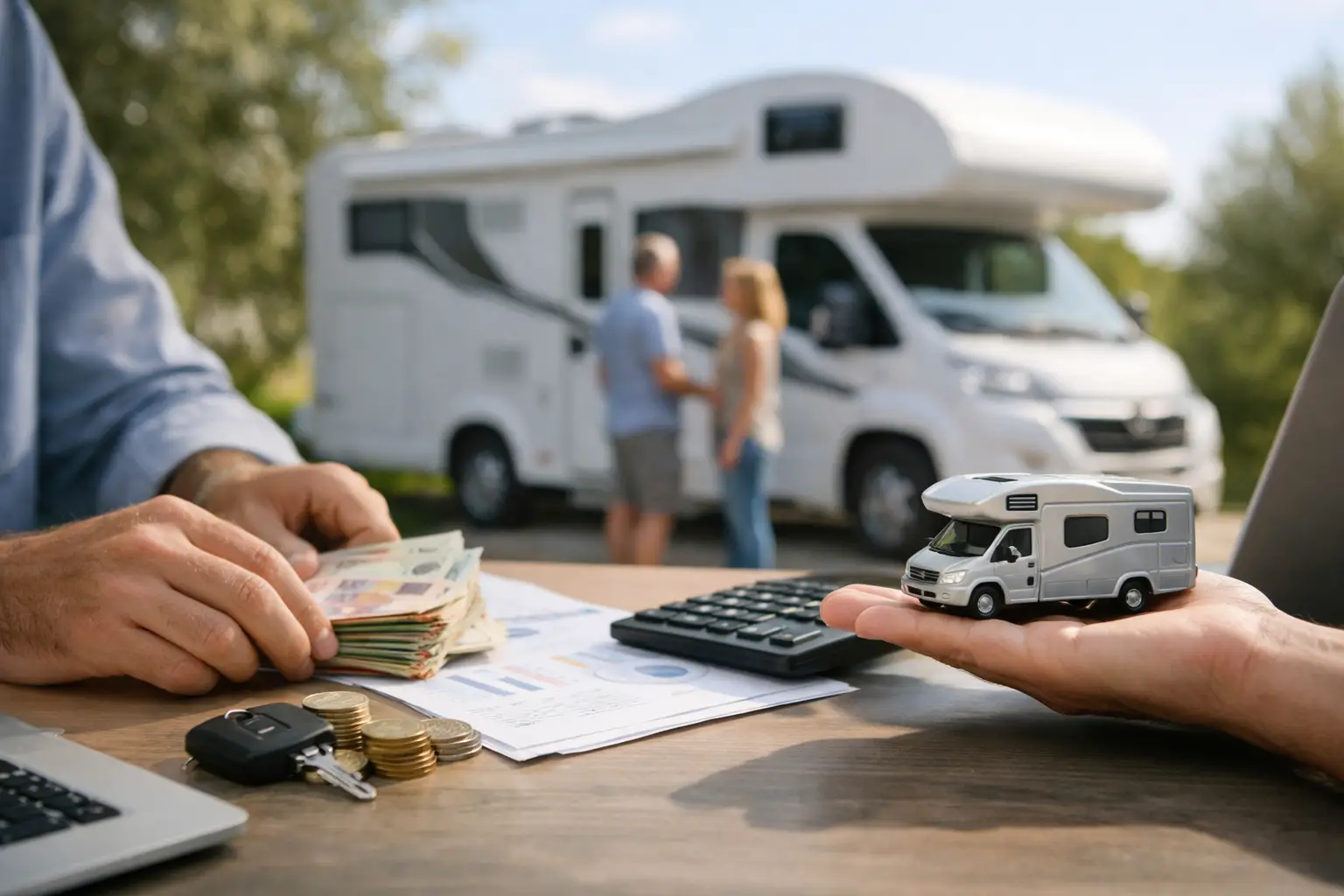
The decision to finance a motorhome or buy it outrightis rarely made on the price tag alone. Perhaps the next family holiday is already fixed, perhaps the dog is finally coming along to the coast, or you want to be able to set off on a whim. At the same time, it involves a larger sum and a question: how much should your freedom cost your bank account?
The right answer depends on your financial situation, the type of vehicle and, above all, your travel plans. If you do the sums honestly, you are not just buying a motorhome, but creating a reliable base for many relaxed trips.
Financing a motorhome or paying cash: the core question
Paying cash means the vehicle is yours immediately, with no monthly instalment and no loan agreement. Financing, on the other hand, spreads the purchase price over a fixed term. This can protect your liquidity and make a better-equipped or newer motorhome possible sooner.
Neither option is better in principle. A cash buyer usually saves loan interest, but should not put all their reserves into the purchase. If you finance, you are more likely to keep money back for everyday life, holidays and unexpected expenses, but you pay more overall than just the price of the vehicle. So what matters is not only what you can pay today, but what will still feel right in two, five or eight years.
Paying cash: clear ownership, fewer ongoing commitments
Buying a motorhome outright is particularly attractive if you can pay the purchase price from free funds and still have sufficient reserves afterwards. You are the owner straight away, with no interest costs and no monthly obligation. That gives you certainty in planning, especially if your income or work situation is not the same every month.
When you later sell, the situation is also straightforward: there is generally no outstanding debt that has to be settled first. You can sell the vehicle flexibly, trade it in or simply keep it for a long time. With well-kept, popular layouts in particular, a good used motorhome can hold its value comparatively well.
The biggest mistake with paying cash, however, is only budgeting for the purchase price. Depending on the vehicle and your starting position, registration, insurance, tax, a pitch, maintenance, tyres, gas inspection and accessories come on top of the purchase. Perhaps you would like an awning, bike rack, solar system, reversing camera or a retrofit for greater independence. A repair reserve belongs in the calculation too.
If you have an empty account after the purchase, you are not automatically travelling more carefree. As a rough guide, you should keep a financial cushion beyond the purchase price for running costs and the unexpected. How large it needs to be is individual. For some, a few months' expenses are enough, while families or the self-employed often deliberately plan more generously.
Financing: freedom today, an instalment with a plan
Financing can make sense if you don't want to tie up all of your savings. Instead of saving for a long time for the full purchase price, you start sooner with the right vehicle and pay a predictable amount each month. That can suit you especially if you want to travel regularly and renting no longer meets your needs in the long run.
It is important to have an instalment that works not just in a good month. Calculate conservatively: what is left if heating costs rise, a car repair comes up or the holiday turns out more expensive than planned? The motorhome instalment should fit your everyday life, not dictate it.
With classic instalment financing, you usually pay a deposit and then equal monthly instalments. The higher the deposit, the smaller the loan amount and interest costs. A longer term lowers the instalment, but often increases the total cost. A final payment (balloon) can also reduce the monthly burden, but requires a larger payment at the end. This option is only relaxed if you factor in the final payment early on or realistically know how it will be settled.
Don't just compare the interest rate. Look at the effective annual interest rate, the total of all instalments, possible fees, special repayments and the terms in case of an early sale. A monthly amount that looks cheaper can become expensive if a high residual debt remains at the end.
The calculation behind the purchase price
An example makes the difference easier to grasp. Suppose a motorhome costs €65,000. If you pay cash, you pay that sum directly and keep only the money you have deliberately set aside for running costs and reserves. With financing and a €20,000 deposit, you finance €45,000. Over several years, interest is added, so the total spend is above the purchase price.
That does not automatically mean paying cash wins. If the €65,000 would otherwise use up all your liquidity, financing can be the more sensible decision. You are then paying for the advantage of staying financially flexible. If, on the other hand, you have enough free funds and see no better use for the money, paying cash saves noticeably in many cases.
Also consider depreciation. New vehicles often lose more value in their first years than inspected used ones. A used motorhome can therefore be interesting for buyers who want solid equipment and wish to limit the entry price. Condition, service history, watertightness, mileage and a layout that really suits your own travel routine are what count.
When each option can be a good fit
Paying cash often suits people who plan for the long term, have sufficient reserves and want as few fixed commitments as possible. It is also suitable if you are buying a well-kept used vehicle and want to retrofit flexibly later. The budget stays transparent: whatever doesn't go into the purchase is available for servicing, a pitch and travel.
Financing can be a good fit if you want to stay liquid, are specifically choosing a newer model with modern safety and comfort features, or don't want to commit all your capital at once. Families often value the fixed predictability of an instalment, provided it is realistically calculated. Even if you use your motorhome very regularly, you may be more inclined to see the higher total price as an investment in many holiday weeks of your own.
Financing is less suitable if the instalment is only manageable with optimism, or if the planned use is still completely open. If you have never travelled in a panel van, semi-integrated or alcove motorhome, you often don't yet know which vehicle size and layout you really like. A purchase made too quickly doesn't get better just because the monthly instalment looks low.
Rent first, then decide with confidence
Before buying, longer hire can be a very practical aid to deciding. You experience not only driving, but also manoeuvring, cooking, sleeping, storage space and how much living space you actually need on the road. With children, a dog or bikes, it quickly becomes clear whether a compact panel van is enough or more space makes sense.
After one or two longer tours, the purchase decision is often much easier. You can compare more specifically and won't finance equipment you later barely use. At Friedas Camper, you can be accompanied personally along this path, from the first travel experience through to workshop, servicing and retrofits – all from a single source and with a focus on what really works in everyday use.
Before you sign: points to put on the table
Before you buy or take out a financing agreement, four topics should be clearly answered:
- What do the purchase price, delivery, registration and the cost of the accessories you want come to in total?
- What additional monthly fixed costs arise from insurance, tax, a pitch and financing?
- How much money remains as a freely available reserve after the deposit or cash payment?
- How long do you expect to keep the motorhome, and what happens if your plans change?
With a used vehicle, also have its condition explained to you in a way you can follow. An expert inspection, documented servicing and a transparent look at possible retrofits protect against surprises. With a new vehicle, take a close look at the scope of delivery and equipment so that you can really compare offers.
In the end, the best decision is the one that lets you set off without getting nervous at every instalment or workshop bill. Whether paid in cash or soundly financed: when the vehicle, budget and your travel plans fit together, the purchase becomes above all one thing – a good start to many free weeks on the road.