Motorhome Retrofits: What Is Worth It
Your first motorhome is often ready to go quickly – until the first longer trip shows what is really missing in everyday use. That is when having your motorhome retrofitted comes up. Not because anything is wrong with the vehicle, but because travel habits change and comfort, safety or self-sufficiency suddenly become more important than they were at the time of purchase.
If you travel more often, you soon notice: an awning makes the pitch more homely, a solar system gives more freedom, and a reversing camera saves nerves on tight campsites. Others want a better lithium battery, additional sockets or a satellite system for long trips. The good news is that a lot can be retrofitted cleanly and professionally – if you first check honestly what really suits your own vehicle and your own travel profile.
Having your motorhome retrofitted – first the need, then the technology
The best retrofit is not automatically the most expensive. It is the one that noticeably improves everyday life. That is why one simple question is worth asking before any decision: how do you actually use your motorhome?
If you mostly stay at well-equipped campsites, you usually don't need maximum self-sufficiency. In that case, comfort items such as an awning, bike rack, TV solution or better sleeping comfort often make more sense than large technology packages. It is different for couples or families who park off-grid, plan longer tours or travel in the off-season. Then solar panels, inverters, stronger on-board batteries or heating optimisations quickly become relevant.
Beginners in particular tend to want everything at once when retrofitting. That sounds good on paper, but is not always smart in practice. Additional technology costs not only money, but also weight, installation time and sometimes storage space. In addition, every system has to suit the vehicle – electrically, structurally and in terms of the maximum permissible mass.
Which retrofits really make sense on a motorhome
Four areas come up especially often: comfort, safety, energy and transport. This is where the biggest differences show in everyday use.
In the comfort area, awnings, air conditioning, additional roof vents, better mattresses or multimedia solutions rank high. For many people an awning is almost the first sensible addition, because it quickly adds quality of time spent outdoors. With air conditioning, travel behaviour matters more. If you mainly travel in southern Europe in high summer, you benefit significantly. For weekend trips on the Lower Rhine, on the other hand, it is often more of a wish than a must.
On safety, many people first think of alarm systems. At least as important, however, are a reversing camera, additional locks, tyre pressure monitoring or suspension optimisation. Larger or heavily loaded vehicles in particular often drive much more steadily with a suitable suspension upgrade. You notice that not only on the motorway, but also on country roads and in crosswinds.
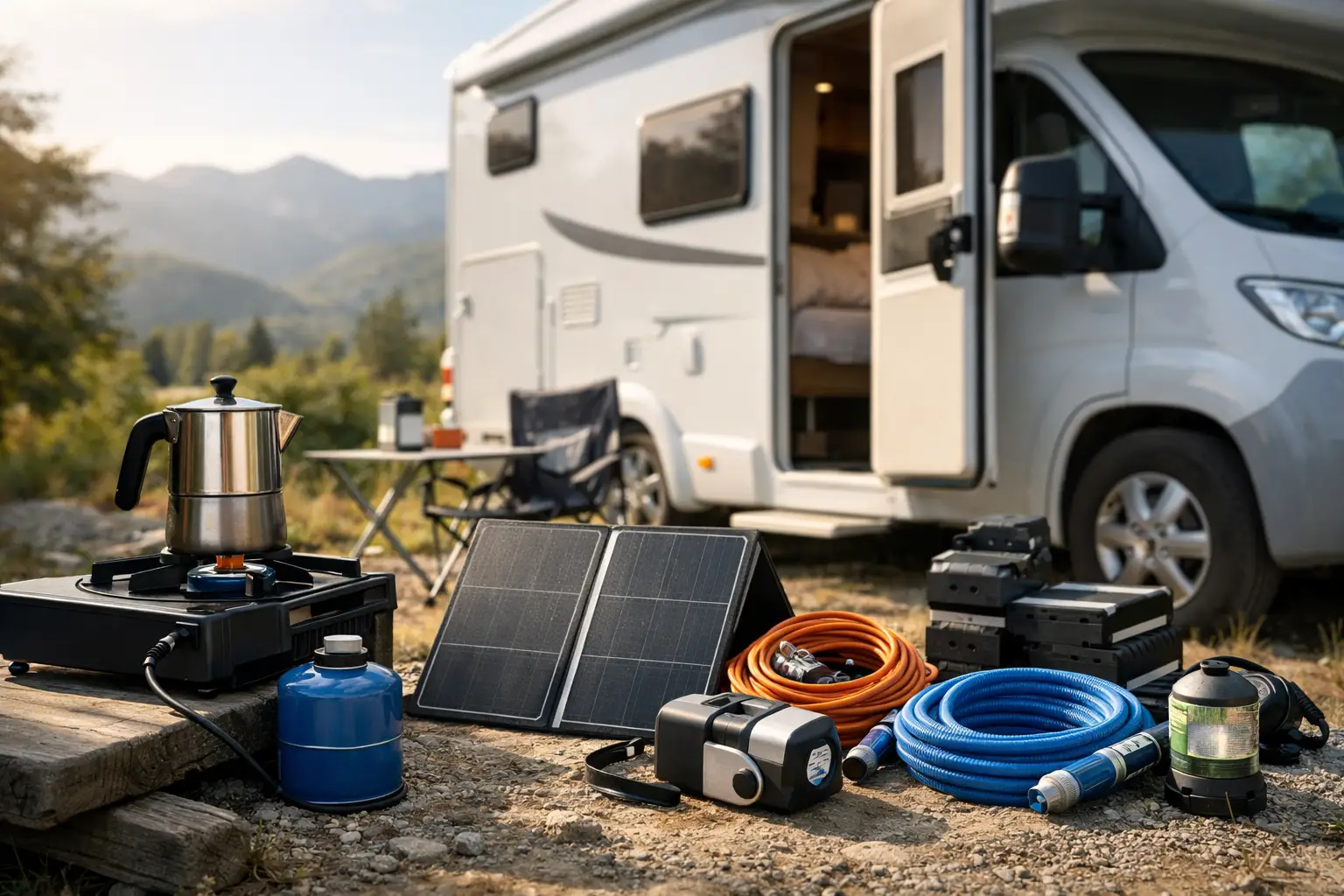
In the energy area, solar system, charging booster, inverter and lithium battery are the typical candidates. Professional planning is particularly worthwhile here. A strong battery alone achieves little if the charger, wiring and consumption profile don't match. If you want to have your motorhome retrofitted, you should therefore think not in individual parts but in terms of the whole system.
Transport mostly concerns bike racks, tow bars or additional storage solutions. Here too there are differences: an e-bike rack has different requirements from a classic bike rack, and not every vehicle is simply suitable for every solution. This applies especially with rear doors, garage access or existing add-ons.
What does it cost to have a motorhome retrofitted?
The costs depend heavily on what is to be installed and how complex the fitting is. A simple retrofit such as additional sockets or USB ports is in a completely different range from a full solar system with a lithium system or a roof air conditioner.
It is important not to look only at the bare product price. Installation, materials, possible adjustments to the vehicle and later service also matter. With electrical components in particular, it quickly shows whether the work was done cleanly. A cheap solution can end up expensive if cable routes are poorly planned, components don't work together or something suddenly fails on holiday.
That is why a transparent quotation is worth more than a supposed bargain. Good workshops calculate comprehensibly, talk openly about alternatives and also say when a wish is technically possible but makes little economic sense. This honesty saves money and trouble later.
Do it yourself or have it retrofitted professionally?
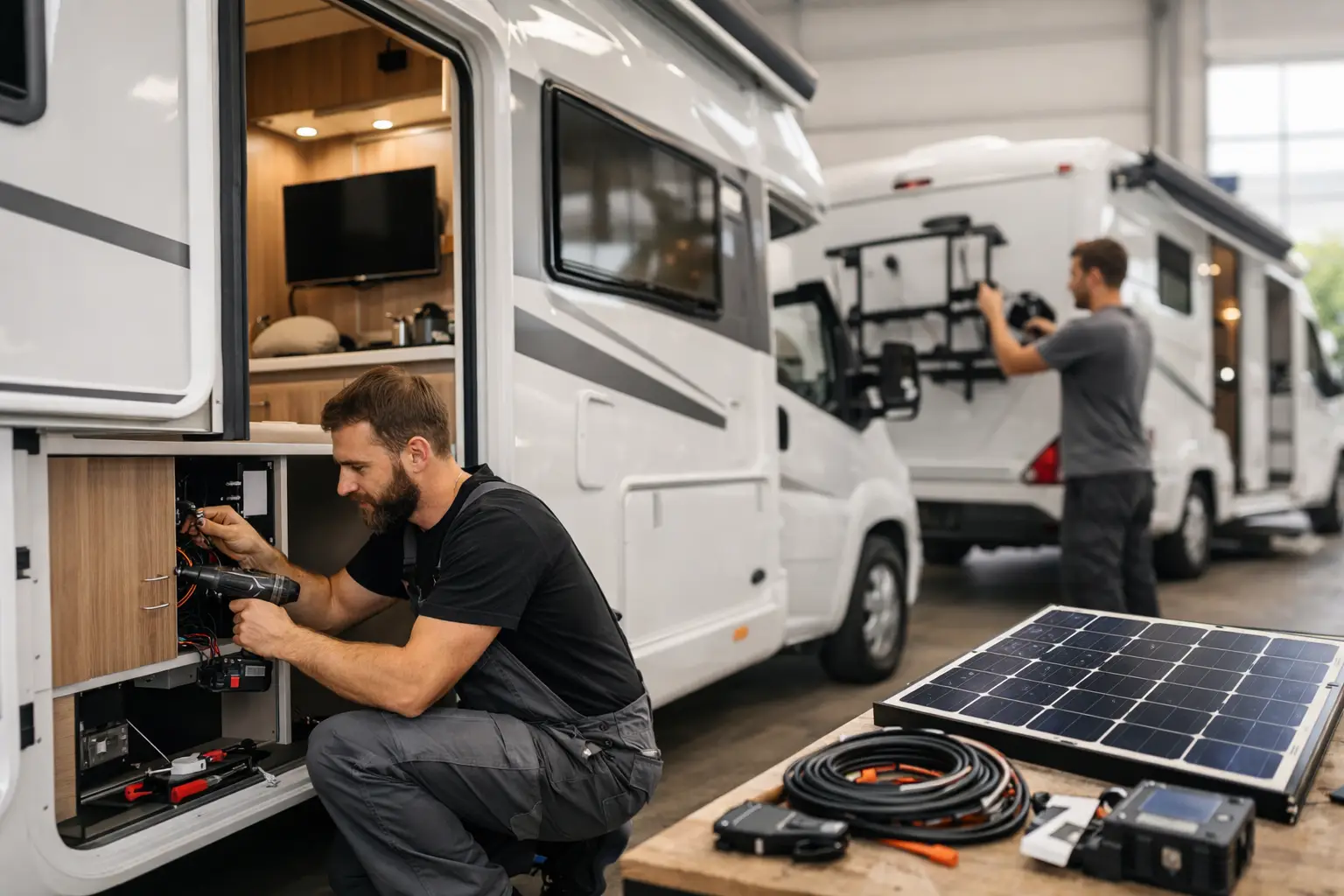
Small things can certainly be done yourself with some manual skill. Simple interior accessories or loose equipment details are usually no problem. As soon as it involves electrics, gas, roof structures, load-bearing areas or safety-relevant components, however, a professional is the better choice.
There are several reasons for this. First, technical safety. Second, warranty and preservation of value. And third, modern motorhomes are often built much more intricately than they look from the outside. Trim panels, cable routes, control units and delicate materials require experience. A cleanly fitted roof fan or a correctly installed solar system not only looks better later, it also works more reliably in the long term.
For many customers another point is decisive: time. If you have been working towards your holiday for months, you don't want a half-finished project sitting on the driveway before you leave. Having a retrofit done professionally therefore also means travelling with fewer worries.
What to look for in a workshop
Not every workshop is automatically specialised in motorhomes. But that is exactly what makes a difference. Motorhomes combine vehicle technology, body, electrics, water, gas and often very individual layouts. Anyone retrofitting here should understand how it all works together.
Check whether the advice addresses your specific model. Good workshops ask about your usage profile, destinations, number of people, existing equipment and weight reserves. They explain the advantages and disadvantages of individual solutions clearly and don't simply sell the biggest package.
Clean documentation is just as important. What was fitted, how is it connected, are there approvals or notes for later servicing? Especially if you later sell your vehicle or plan further conversions, a traceable job is a real advantage.
In the NRW region, many customers also find it practical to have a contact in the region. Short distances help not only with planning, but also with follow-up questions, servicing or additions. Friedas Camper combines exactly that with workshop expertise and the advantage that purchase, hire and service are thought of as one.
Typical mistakes when retrofitting
The most common mistake is over-equipping. Lots of technology sounds good but is often rarely used. If you only travel three weeks a year, you don't automatically need the same set-up as a long-term traveller. The second mistake is the wrong order. First the solar system, then the battery, later an inverter as well – without overall planning, unnecessary extra costs quickly arise.
Weight is also regularly underestimated. Every extra brings kilos with it. That applies not only to large retrofits such as air conditioning or levelling jacks, but in total to many small components as well. Family vehicles in particular quickly reach the limit. Here the sums should be done properly in advance.
Another point is expectations. Not every retrofit turns a basic vehicle into a fully self-sufficient long-distance motorhome. Some things improve everyday life significantly, others only in special situations. Honest advice separates the two clearly.
Who does it especially pay off for?
Having a motorhome retrofitted is worthwhile above all if the existing vehicle is fundamentally a good fit. If the layout, engine and condition are right, targeted retrofits are often more economical than changing vehicles. This applies especially to owners who want to drive their motorhome for the long term or who know exactly what they are missing after the first trips.
Hire customers who want to buy lateralso benefit from this experience. If you have experienced different equipment on holiday, you usually make better retrofit decisions. Then you choose not by brochure but by practice.
In the end it is not about fitting as much as possible. It is about equipping your own motorhome so that it suits your life better – for weekend trips, family holidays or long tours with maximum freedom. If the technology makes travelling easier rather than more complicated, the retrofit was exactly right.
If you take your time over it and rely on sound advice, you not only start your next holiday better equipped. You often set off much more relaxed, too.