Buying a Used Motorhome: How to Check It Properly
The first coffee in front of the vehicle, the open cupboard doors, a look into the bathroom: if you are searching for a "used motorhome for sale", you should not be guided by a good first impression alone. A used motorhome can be the direct route to lots of free weekends – provided the layout, condition and technology really suit you. A low purchase price helps little if moisture, worn tyres or an unsuitable layout later dampen the enjoyment.
Buying used means: condition before year of manufacture
An older motorhome with a traceable history, a dry living cabin and well-kept technology can be a better choice than a younger vehicle with a backlog of repairs. The year of manufacture gives a first indication, but does not decide the value on its own. How was the motorhome used? Was it stored under cover or outdoors all year round? Was servicing carried out regularly? When buying used, these questions are often more important than a few years' difference on paper.
Mileage also needs putting into context. A motorhome with 60,000 kilometres that has been driven and serviced regularly need not be a risk. Conversely, a vehicle with very low mileage may have stood for a long time. In that case the brakes, tyres, battery and seals deserve particular attention.
Before the viewing: plan your own trips first
Before you compare offers, it is worth taking an honest look at your travel habits. If you mostly set off spontaneously for the weekend as a couple, you do not need a family layout with six berths. If children or a dog come along, freedom of movement, storage and safe seats count for much more. Anyone who drives long distances will judge a compact, easy-to-drive vehicle differently from someone who stays for several weeks on a campsite.
Panel van, semi-integrated or fully integrated?
A panel van is manoeuvrable, often fits better into everyday life and is excellent for couples or small families. In return, the living space is more compact and the storage limited. Semi-integrated motorhomes combine a pleasant sense of space with good drivability. For many families and couples they are a strong all-rounder. Fully integrated models offer particularly high living comfort and a generous front, but are usually bigger, heavier and more demanding to maintain.
Also check the payload. Bikes, camping furniture, awning, food, clothing and water quickly add up in weight. On older vehicles, retrofitted extras can significantly reduce the available payload. A look at the vehicle documents prevents your new motorhome from reaching its weight limit before the first trip.
Buying a used motorhome: what belongs on the viewing checklist
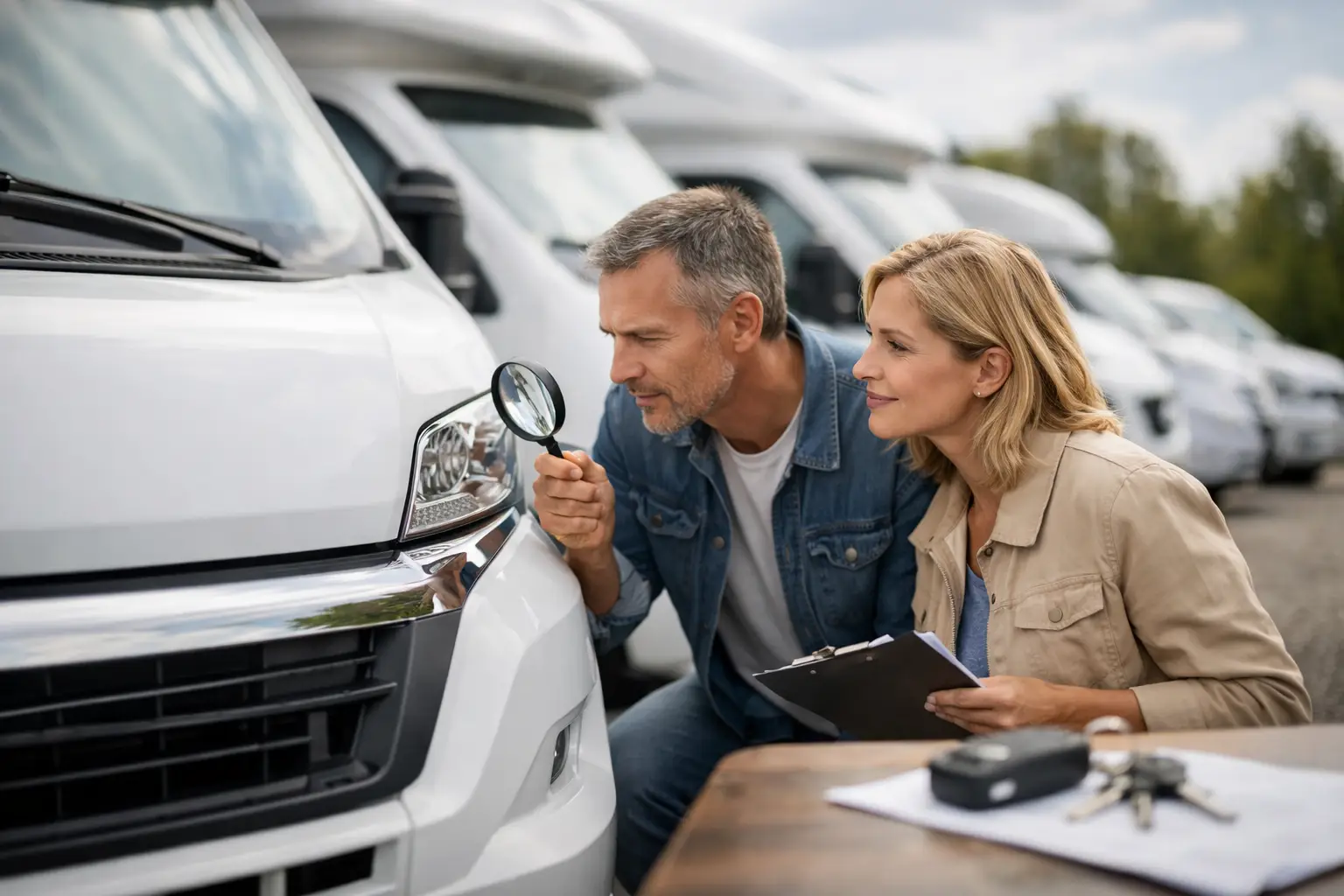
Take your time and, if possible, view a vehicle in daylight. A motorhome that has been cleaned up properly is of course allowed to look well kept. What matters is what becomes visible behind cushions, flaps and covers. Have all functions shown to you rather than settling for a quick walk-round.
At the viewing, you should systematically check at least these areas:
- Roof, outer walls and sealant joints for cracks, discolouration, blisters and makeshift sealing
- Floor, corners, window frames, roof vents and storage areas for soft spots, smell or traces of moisture
- Tyres for age, tread, damage and even wear
- Gas inspection, heating, fridge, hob, water pump, toilet and lighting for function
- Leisure battery, charger, sockets, solar system and electric step for reliable operation
Pay attention to a musty smell in the interior. It is no final proof of damage, but a clear signal to look more closely. If wall areas or the floor in the corners feel soft, an expert inspection should follow. Mould spots in cupboards, discolouration on ceiling trims or corroded screws can also point to earlier water ingress.
Moisture is the decisive check
The living cabin is the heart of a motorhome – and moisture is its biggest enemy. Water can get in through roof vents, windows, add-on parts or damaged seals. From the outside the damage sometimes stays invisible for a long time, while wood, insulation and walls are already changing on the inside.
Ask for documented leak tests and repair invoices. Regular records build trust but do not replace a current measurement. Especially with older vehicles or conspicuous spots, a moisture check by a specialist workshop makes sense. In relation to the purchase price it costs little and can protect you from a very expensive wrong decision.
If moisture damage has already been repaired, that is not automatically a reason to rule the vehicle out. What matters is whether the cause was properly fixed, which work is documented and whether the affected spot is dry today. Honest documents are worth more here than a blanket statement like "That was only a minor thing".
Test drive: don't just judge the engine
On a test drive it is not only about whether the engine starts. Pay attention to the steering, braking behaviour, clutch, gear change and unusual noises. Does the vehicle drive straight? Does it vibrate when braking? Does the engine start reliably when warm too? With automatic gearboxes, gear changes should be smooth.
Also check the view from the cab. Do you have a good view in the mirrors? Are the seating position and controls comfortable for you? Beginners in particular underestimate how much driving comfort affects the desire to travel. A vehicle may look as lovely as you like in pictures – if you feel unsure behind the wheel, it may not suit your plans.
After the drive, it is worth looking under the vehicle. Fresh traces of fluid, heavy corrosion or conspicuous damage to the underbody should be raised. If you are seriously interested in buying, a check of the brakes and suspension by a workshop can also make sense.
Assessing documents, servicing and accessories properly
A complete folder is a good sign when buying used. It includes vehicle documents, TÜV inspection reports (HU-Berichte), invoices for services and repairs, records of gas and leak tests, and operating manuals. If mileage, service intervals and invoice dates add up consistently, that speaks for careful previous ownership.
Accessories can add value if they really fit your use. An awning, bike rack, solar system, reversing camera or tow bar are practical. But check whether the retrofits were professionally fitted and, if necessary, entered in the vehicle documents or officially approved. An overloaded accessory package is no advantage if it uses up the payload or causes problems later.
Private purchase or specialist dealer?
A private purchase can be attractive on price and sometimes offers a large choice. In return, responsibility for inspection, contract design and possible defects lies more with you. If you know a lot about technology and have time for a thorough check, you can find suitable vehicles. Without experience, however, the risk of overlooking costly points increases.
With a specialist dealer, buyers usually benefit from a clear vehicle inspection, traceable processes and a fixed contact person. At Friedas Camper in Kempen, the offer includes not only inspected vehicles but also a workshop, servicing and retrofits. That is particularly helpful if a reversing camera, a bike rack or a technical check-up is still on your wish list after the purchase.
Putting the price into realistic perspective
Compare not only similar years of manufacture, but also engine, mileage, layout, equipment, servicing condition and season. An unusually low price may make you curious, but should always prompt the question: what is missing, what is due, or what has not yet been noticed? Conversely, a higher price is understandable if leak-test records, new tyres, fresh services and good equipment are included.
Plan a financial buffer after the purchase. Even a carefully inspected used motorhome may need new upholstery, a battery, a service or small adjustments for your everyday needs. If you factor in this amount from the start, you begin your first season more relaxed.
Feel free to sleep on it for a night before you sign. The right motorhome not only feels like freedom, it also convinces on the sober questions of condition, documents and running costs. Then nothing stands in the way of your first pitch with a view and breakfast under the open sky.