Semi-Integrated or Fully Integrated: Which Suits You?
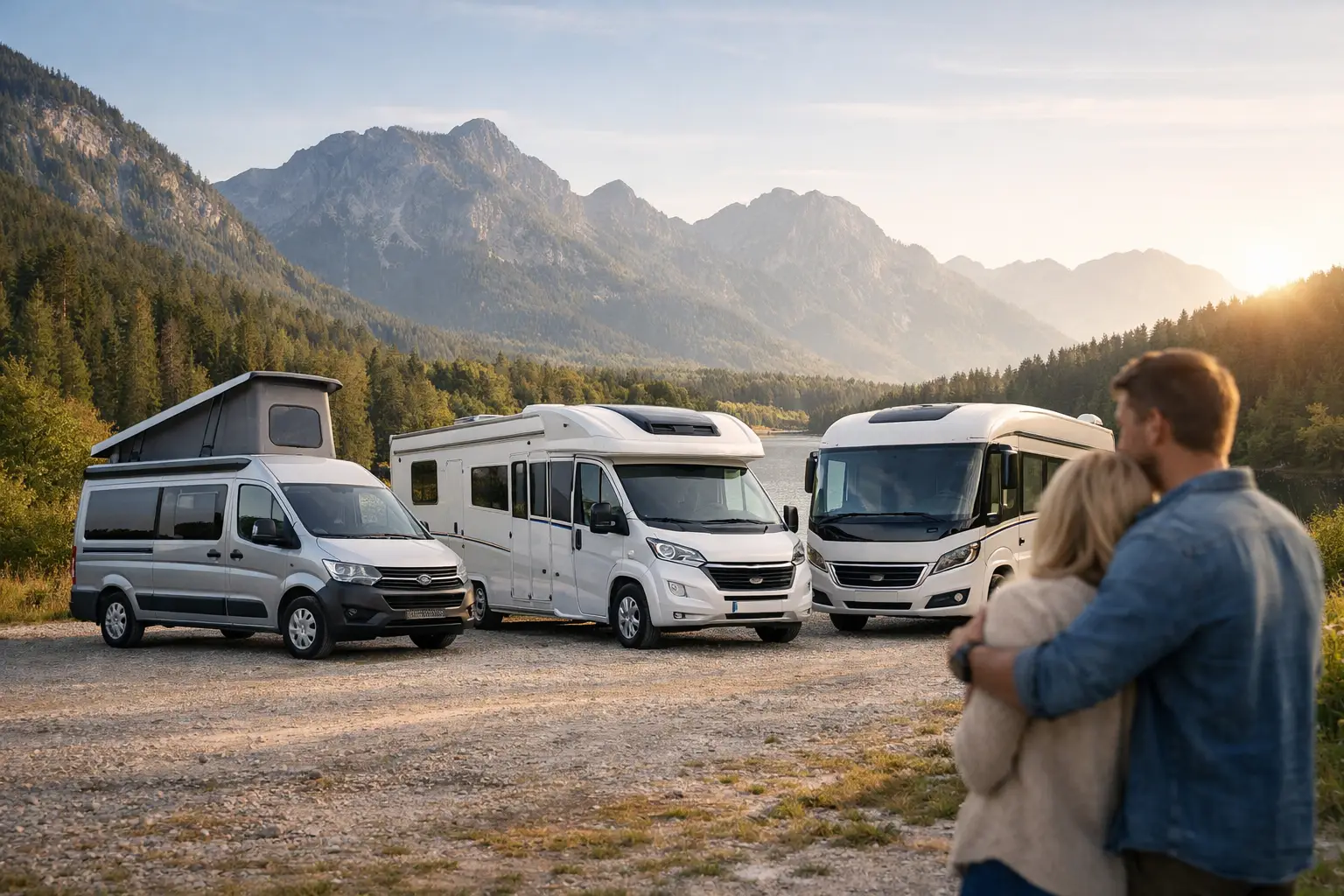
If you want to rent or buy a larger motorhome for the first time, you quickly face the question: semi-integrated or fully integrated? Both vehicle types offer a lot of living comfort, but differ clearly in the cab, sense of space, price and use. The right choice therefore depends less on the best-looking layout at first glance than on your trips, your travel companions and how much space you really need.
A couple who regularly travel through France and also visit an old town now and then has different needs from a family with two children, a dog and a lot of luggage. If you know these differences, you decide with more confidence – and set off more relaxed on your next break.
What do semi-integrated and fully integrated mean?
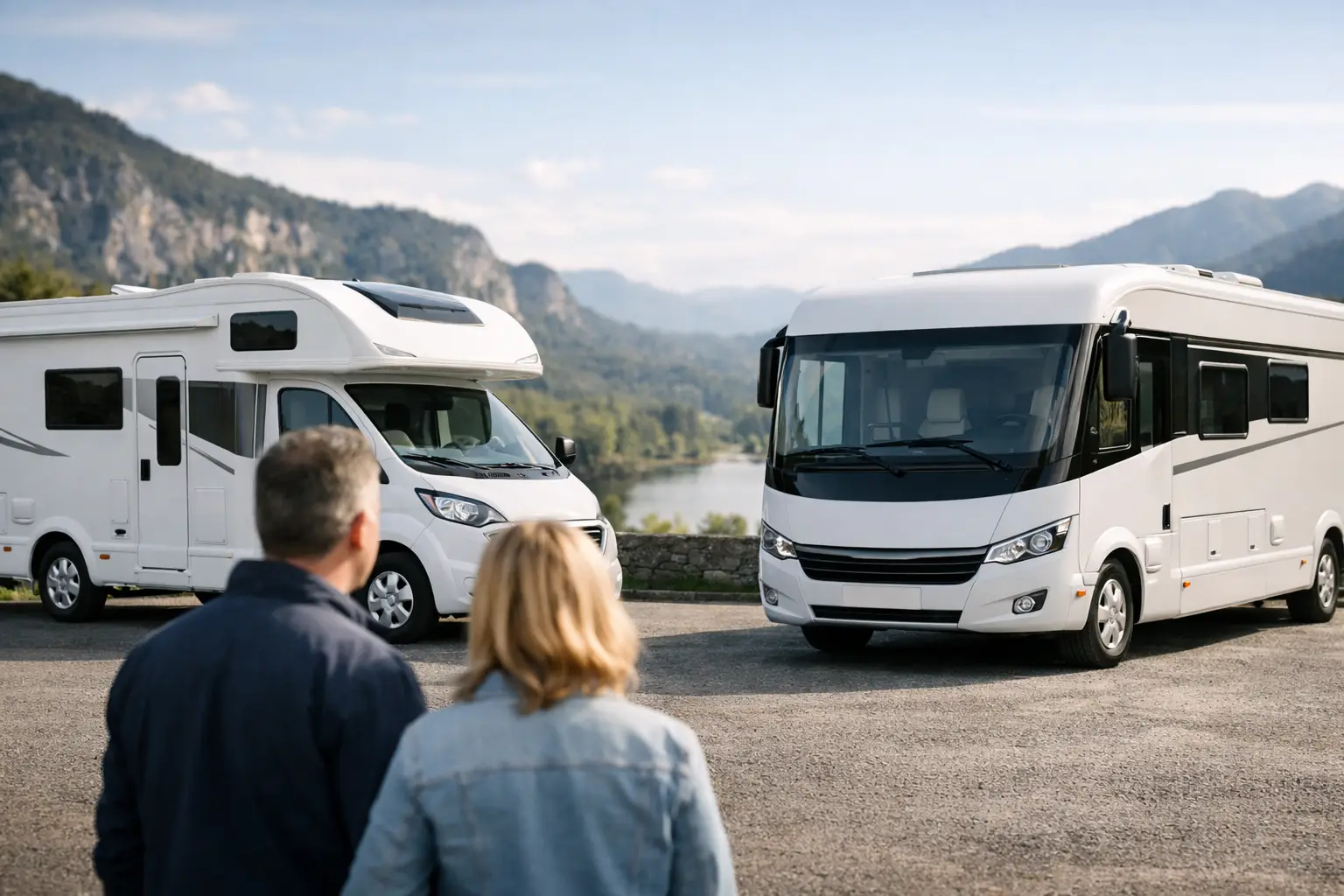
In a semi-integrated motorhome, the standard cab of the base vehicle is retained. Living area and cab merge, but can still be clearly told apart in their shape. From the outside, a semi-integrated usually looks slimmer and more dynamic. Inside, the swivelling cab seats are often part of the seating area.
A fully integrated motorhome, by contrast, has a cab designed entirely by the coachbuilder. The front, the large panoramic windscreen and the transition to the living area form a single unit. This creates a particularly generous sense of space and often leaves room for a drop-down bed above the front seats.
Both variants can be fitted with single beds, a French bed, a queen bed or a generous rear garage. So it is not only the vehicle class that matters. Length, maximum permissible weight, seats and the specific layout also deserve a close look.
Semi-integrated motorhomes: flexible and pleasant to drive
For many campers, semi-integrated motorhomes are the straightforward entry into the world of larger motorhomes. They combine a full bathroom, kitchen, sleeping area and storage with dimensions that remain easy to handle in everyday use. Models between about six and seven and a half metres in particular often offer a strong compromise between living comfort and drivability.
At the wheel, you benefit from a familiar cab. The view, the controls and the driving feel are more like a van than a large coach. That can be reassuring on narrow country roads, on city visits or when manoeuvring. On a rental holiday, too, that is a real advantage if you have little experience with motorhomes so far.
In the living area, turning the front seats creates a cosy seating area for two to four people. For couples this is usually more than enough. Families should look more closely: are the seats, table size and storage enough for everyone? Are there enough approved travel seats? And does each child need a fixed bed, without the seating area having to be converted every evening?
Who a semi-integrated suits particularly well
A semi-integrated is often the right choice for couples, active travellers and families looking for a motorhome that is easy to drive. If you change location often, plan spontaneous outings or want to travel beyond big campsites, you will appreciate the handier dimensions and the generally lower fuel consumption compared with a comparable fully integrated model.
The budget plays a part too. Semi-integrated motorhomes are often cheaper than fully integrated models, whether to buy or rent . That does not mean less holiday comfort. With smart equipment – such as automatic transmission, awning, bike rack, reversing camera or powerful heating – a semi-integrated becomes a reliable motorhome for almost any season.
Fully integrated motorhomes: plenty of space and a special travel feeling
A fully integrated motorhome is made for people who want particularly high living quality on the road. As soon as you step in, the open transition between cab and living area stands out. The wide windscreen brings in light and a lovely view of the pitch or the coastal road. When parked, the front area feels much more generous than in many semi-integrated models.
A big advantage is the drop-down bed at the front. It can be pulled down when needed and offers two additional beds without the seating area having to be converted. That is interesting for families, grandparents with grandchildren or couples with occasional visitors. During the day, the bed disappears back under the ceiling and the living area stays usable.
Fully integrated models are also often designed for longer trips and high expectations of equipment. Large kitchens, a separate shower, spacious wardrobes and plenty of storage are not unusual. If you are on the road for several weeks or months, you notice the difference: clothes, supplies and camping furniture find their place better instead of constantly being moved around.
What to bear in mind with a fully integrated
More space comes at a price. Fully integrated motorhomes are generally more expensive to buy and often to rent as well. Because of the larger front and the special body, repairs to the cab can be more involved. External dimensions are often larger and the weight higher, too.
The driving feel is different as well. The large windscreen offers an excellent view, but the vehicle width and the body drawn far forward call for a little more attention. That is not a deal-breaker – many drivers get used to it quickly. For a first motorhome trip, however, a semi-integrated can still be the more relaxed choice.
Also check the maximum permissible weight. A large vehicle with four beds, extensive equipment, bikes, luggage and full water tanks can reach its weight limit faster than you think. If you travel with a family, don't treat the realistic payload as an afterthought.
Direct comparison: space versus everyday practicality
When comparing "semi-integrated or fully integrated", there is no general winner. A semi-integrated usually scores on purchase cost, handiness and a familiar driving feel. A fully integrated often offers more space, a brighter ambience and, thanks to the drop-down bed, extra sleeping options.
For two people, a well-planned semi-integrated with single beds at the rear and a generous seating area can be perfectly sufficient. If, on the other hand, you regularly travel as four, like to spend longer in the vehicle in bad weather or want plenty of living space on extended tours, you are more likely to benefit from a fully integrated model.
The kind of pitches you use counts too. On smaller nature sites, in narrow villages or on trips with many stopovers, a more compact vehicle is pleasant. If you would rather stay several days on a comfortable campsite and use the motorhome as a mobile holiday home, it can often be a little bigger and homelier.
Before renting or buying: how to make a good decision
Don't just look at photos. Sit at the table, swivel the front seats and open the cupboards and bathroom. Test whether you lie comfortably in the bed, whether the shower suits you and whether the seating area remains a pleasant place to be even in the rain. With several travellers, each person should have their own space for clothes and personal items.
For a first trip , renting can be particularly sensible. You experience in everyday use whether the vehicle length, sleeping arrangement and storage suit you, without committing straight away. Don't just plan the drive, but typical situations too: where do shoes go? Is the kitchen enough for your meals? Can bikes come along safely? How quickly is the bed made up in the evening?
At Friedas Camper, you get personal support if you are torn between different layouts and vehicle classes. Honest advice saves many compromises later – on your first weekend on the Niederrhein just as on the long tour heading south.
Equipment can change the decision
Sometimes it is not the body type that decides, but a feature of the equipment. For some travellers, a separate shower is more important than a drop-down bed. Others insist on driving an automatic, using a large rear garage for e-bikes or travelling in winter with good insulation and heating .
For families, pay particular attention to Isofix options, approved seats and safe beds. Dog owners should check whether there is a quiet spot to lie and whether the walkway is constantly blocked. If you want to work from home while travelling, you need a functional seating area, enough power and storage for equipment. These requirements can make a generous semi-integrated more sensible than a fully integrated with an unsuitable layout.
So take time for the viewing and ask concrete questions. The best motorhome is not the biggest or most expensive model, but the one in which your travel habits work without constant improvising. Then there is more time for what matters on the road: set off, arrive and enjoy the freedom.