What Equipment Does a Camper Really Need?
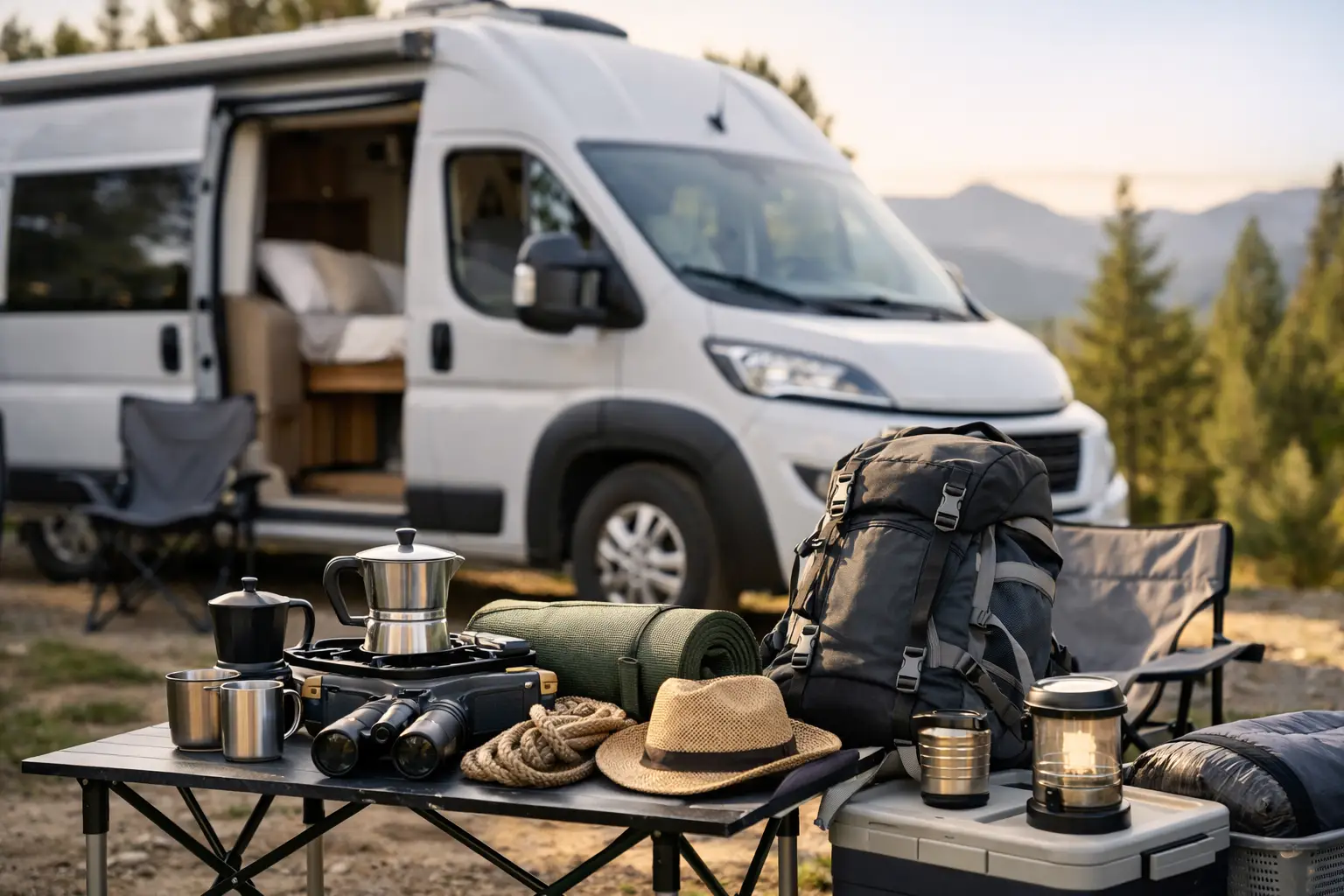
The first evening on the pitch often decides whether camping feels like freedom or improvisation: it gets dark, hunger sets in, the phone is almost out of battery – and somewhere that one adapter is missing. What equipment does a camper needfor travel to stay relaxed? Not as much as possible, but the things that suit the vehicle, destination and way of travelling.
A panel van for two people needs something different from a semi-integrated motorhome for a family. If you travel on campsites in summer, you have different needs from someone who wants to stay off-grid by a lake in spring. Good basic equipment creates safety and comfort without unnecessarily burdening storage space and payload.
What equipment does a camper need as a basis?
The most important equipment is often already in the vehicle: beds, seating area, hob, fridge, heating, fresh and waste water tanks and the basic electrical supply. Before your first tour, it is still worth taking a close look. Where are the fuses, gas shut-off valves and water drain valves? How is the heating operated? And how much payload is actually left after travel companions, bikes and luggage?
With a rental camper , this briefing is part of a relaxed start. If you buy your own motorhome, you should also get to know its functions calmly – ideally not only on the first pitch. A short test at home saves time and nerves on the road.
For departure you also need the classic vehicle equipment: the warning vest, warning triangle, first-aid kit, spare fuses and warning lights should be checked. Additional requirements apply in many European countries. Depending on your route, extra warning vests, breathalysers, snow chains or environmental stickers may be sensible or mandatory.
Weight is also an important topic. Camping chairs, barbecue, drinks supplies and e-bikes add up faster than you think. Overloading is not a minor offence, but can mean fines, poorer handling and, in the worst case, trouble with the insurance. If you pack light and with care, you drive more safely.
Electricity, water and gas: the technical camper equipment
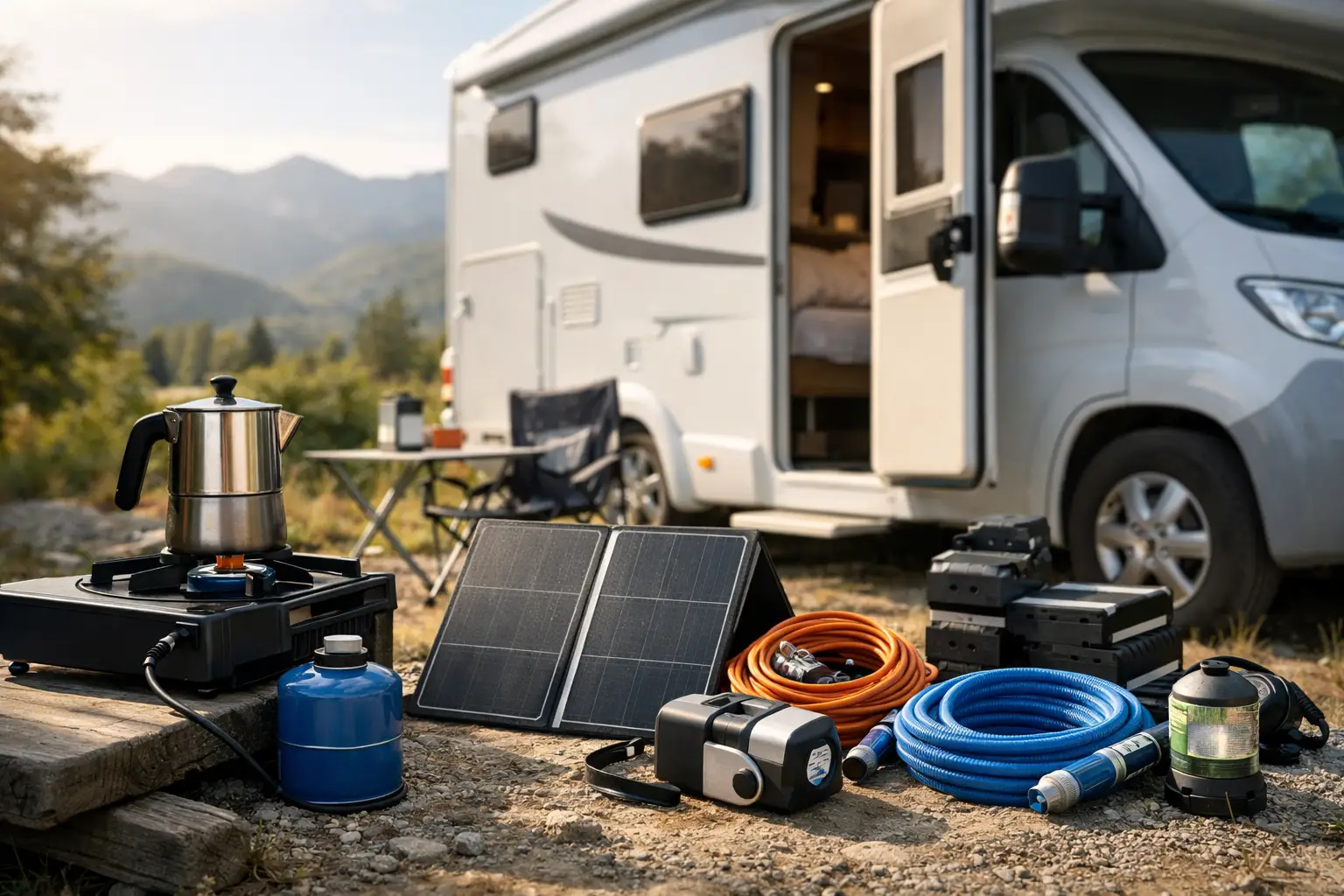
Without electricity, little runs in a motorhome: lighting, water pump, fridge control, heating and chargers depend on it. For the campsite, a sufficiently long power cable suitable for outdoor use with a CEE plug is therefore part of the basic equipment. A suitable adapter can be helpful, as not every site is equipped the same way technically.
A cable reel should be fully unwound so that it doesn't overheat under load. A small multi-socket for the interior and a charger for phone or tablet with a 12-volt connection are also useful. If you want to stay off-grid for longer, you will benefit from a powerful leisure battery. A solar system can significantly improve independence, but is not a must for weekend trips with regular campsite stops.
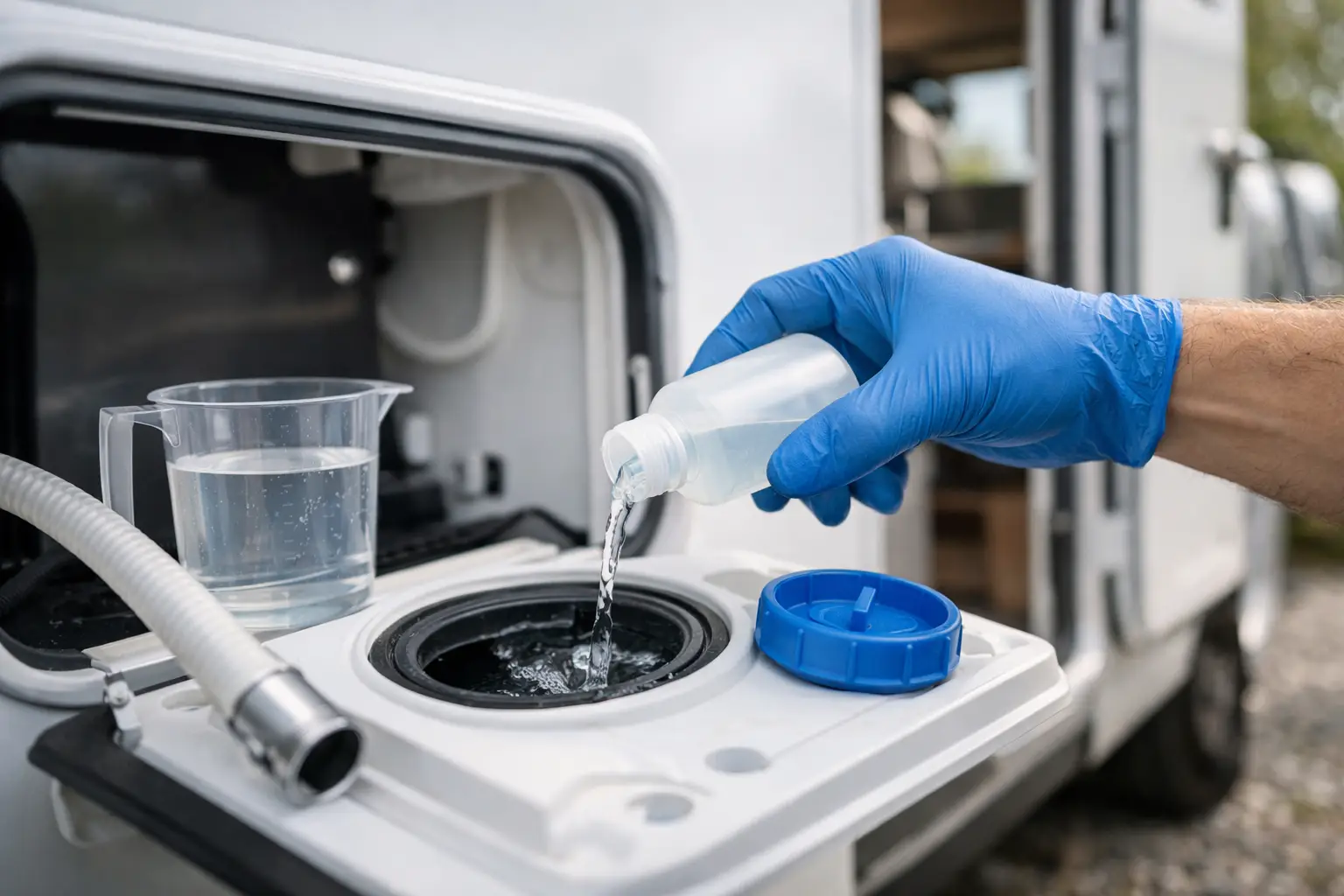
As for water: fresh water is not an unlimited supply. A drinking water hose, ideally with suitable connectors, and a watering can for hard-to-reach water points make filling up easier. For looking after the system, suitable products for cleaning tanks and pipes are sensible. Aggressive household cleaners do not belong in the sensitive tanks and seals.
Depending on the vehicle, gas supplies the hob, heating, hot water and in some cases the fridge. Check the gas bottle level before departure and, on longer, cooler trips, carry a second bottle if appropriate – provided storage space, holder and payload allow. A gas bottle must never be transported loose. A small gas detector can provide extra safety, but does not replace regular checks or proper handling.
Kitchen and provisions: practical rather than overloaded
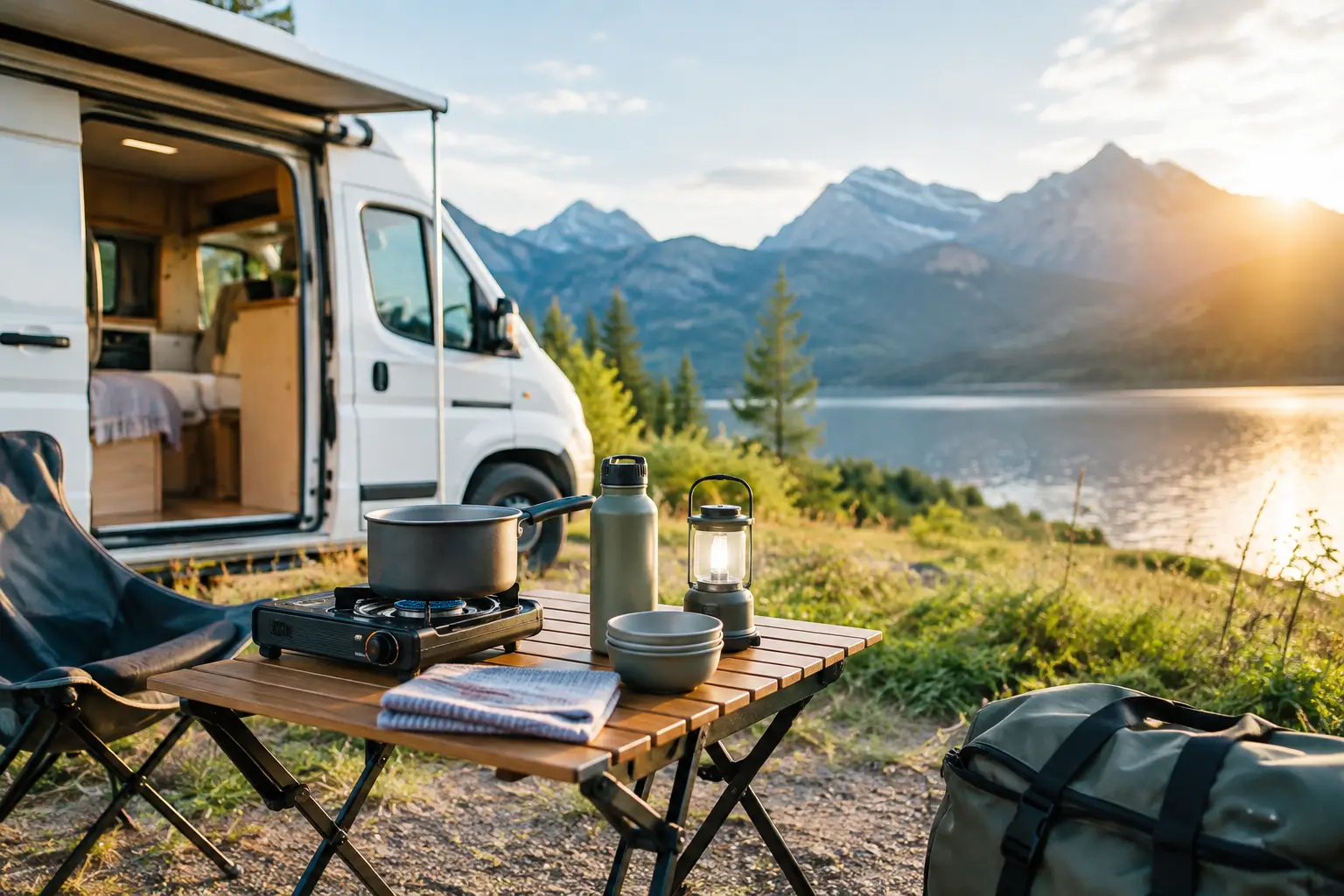
A camper kitchen doesn't have to be big, but it should work reliably. In principle, a pot, a pan, a sharp knife, chopping board, tin opener, cooking spoon and crockery for all travel companions are enough. Add cups, glasses, cutlery, storage containers and a kettle, if mains hook-up is available or the inverter is designed for it.
For food, a simple rule works well: plan the first one to two days specifically and buy more on the way. Tinned food, pasta, coffee, spices, oil and a few snacks make good supplies. Large crates of drinks and too much fresh food, on the other hand, take up a lot of weight and space. Especially when travelling through Germany, France or Italy, you can usually find shops within easy reach.
Washing-up liquid, sponge, tea towels, bin bags and a small washing-up bowl also belong in the vehicle. If you wash up on campsites, you save water in your own tank. For separating rubbish, two compact, closable containers help – especially in warm weather and on longer stages.
Sleeping, living and sitting outside
Good sleep is not a question of luxury. Suitable bed linen or sleeping bags, pillows and, depending on the season, an extra blanket therefore belong on every packing list. Blackouts and fly screens are present in many vehicles. Still, check that they close properly and that all windows are locked.
Outside, the camper quickly becomes a favourite spot. Two to four comfortable camping chairs, a sturdy table and an outdoor light are often enough. An awning provides shade, but should never be left unattended in wind. Even a strong gust can cause expensive damage. Tent pegs and guy lines are sensible, but should only be used where the ground and the site rules allow.
For families, a picnic blanket, card games, drawing materials and a ball are often more valuable than elaborate entertainment technology. Dog owners should also think of a lead, bowl, towel, poo bags and a way to secure the dog while driving. The dog should never travel unsecured in the living area.
Bathroom, toilet and personal hygiene
A camper bathroom is compact – and that is exactly why small, well-organised things help. Towels, wash bag, toilet paper, soap, wet wipes and a laundry bag are the basics. Microfibre towels dry quickly and need little storage space. Shower shoes are pleasant on many campsites, especially in communal showers.
For the cassette toilet, you need a suitable sanitary fluid and, if required, special toilet paper. Dispose of the contents only at designated stations. The drain on the pitch or a normal toilet are off limits. If you follow these simple rules, you help keep pitches and disposal facilities pleasant for everyone.
A small travel first-aid kit belongs in every vehicle. It should be put together individually and contain plasters, disinfectant, pain relief and personal medication. Sun cream, insect repellent and a tick remover are also very sensible, depending on your destination.
Safety and breakdown assistance on the road
Campers travel relaxed when they are prepared for the little things. In addition to the prescribed safety equipment, a fire extinguisher or extinguishing spray, a torch, work gloves and a compact tool set belong in the vehicle. Cable ties, gaffer tape, spare bulbs, a tyre pressure gauge and a small ladder for high storage compartments solve many small problems on the road.
Before every longer drive, check tyre pressure, lighting, fluid levels and that windows, roof vents, cupboards and external flaps are securely locked. Roof windows in particular are easily overlooked. Bikes on the carrier must also be fastened correctly, and the number plate must not be covered.
A smoke alarm and a carbon monoxide alarm are sensible additions, especially if you heat with gas. They provide an extra warning, but do not replace regular servicing of the heating and gas system. Technical retrofits should be carried out professionally – at Friedas Camper, suitable solutions, from an additional battery to a comfortable retrofit, can be discussed in person.
What you don't need to buy straight away
The best equipment grows with your own travel experience. A generator, a large inverter, satellite system, outdoor kitchen or extensive tent extension can be sensible – but not automatically. If you mostly stay on campsites, you need less independence technology. If you regularly travel for several weeks with children, you will value storage space, seating comfort and clever organisation much more highly.
It is better to start with a good basis and to note after each tour what was missing or went unused. That way, step by step, you build a camper that really suits you: ready for spontaneous weekends on the Niederrhein just as for long summer drives towards the sea. Then there is more room for what camping is about – setting off, arriving and enjoying the freedom.