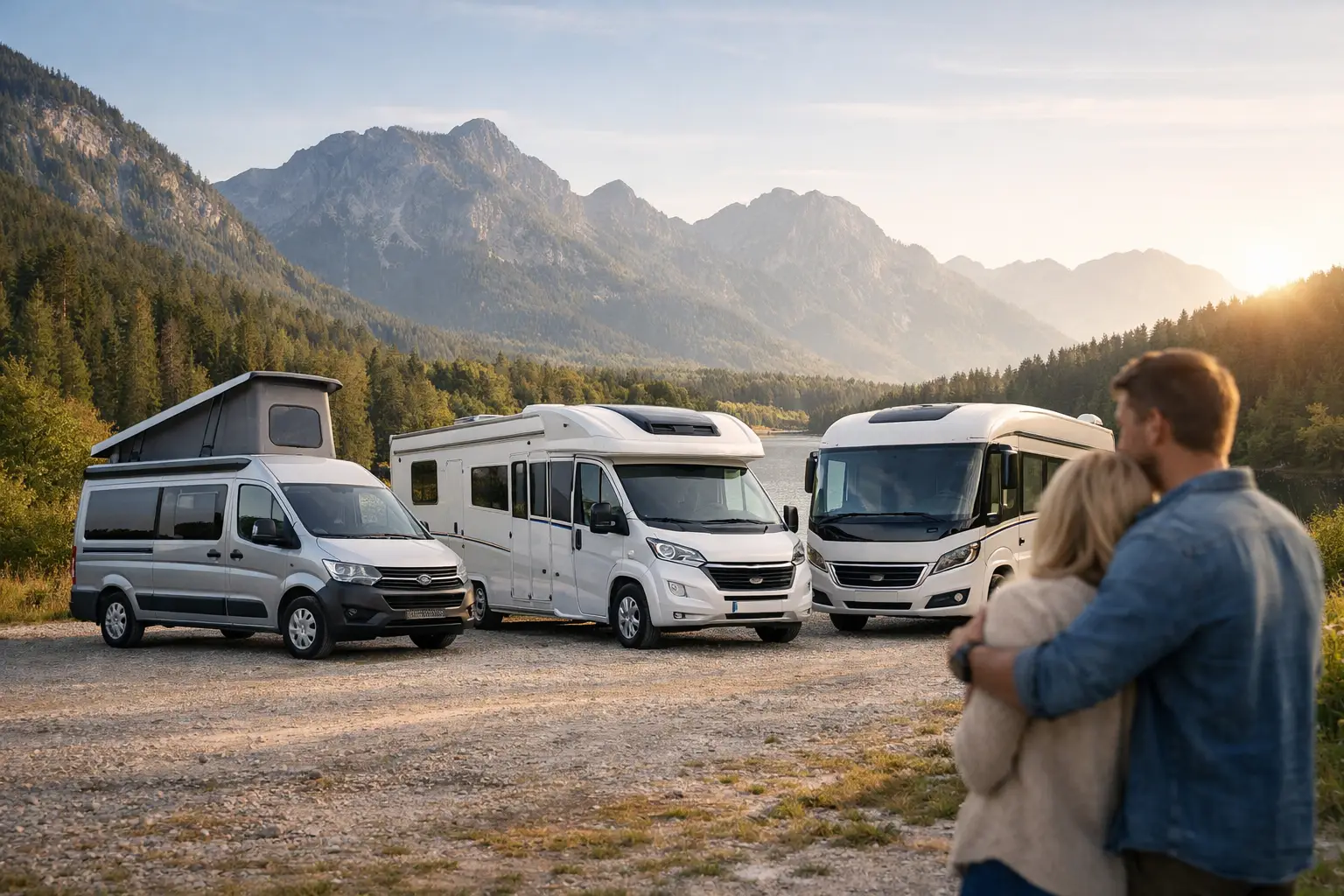
Panel Van or Motorhome: Which Suits You Better?
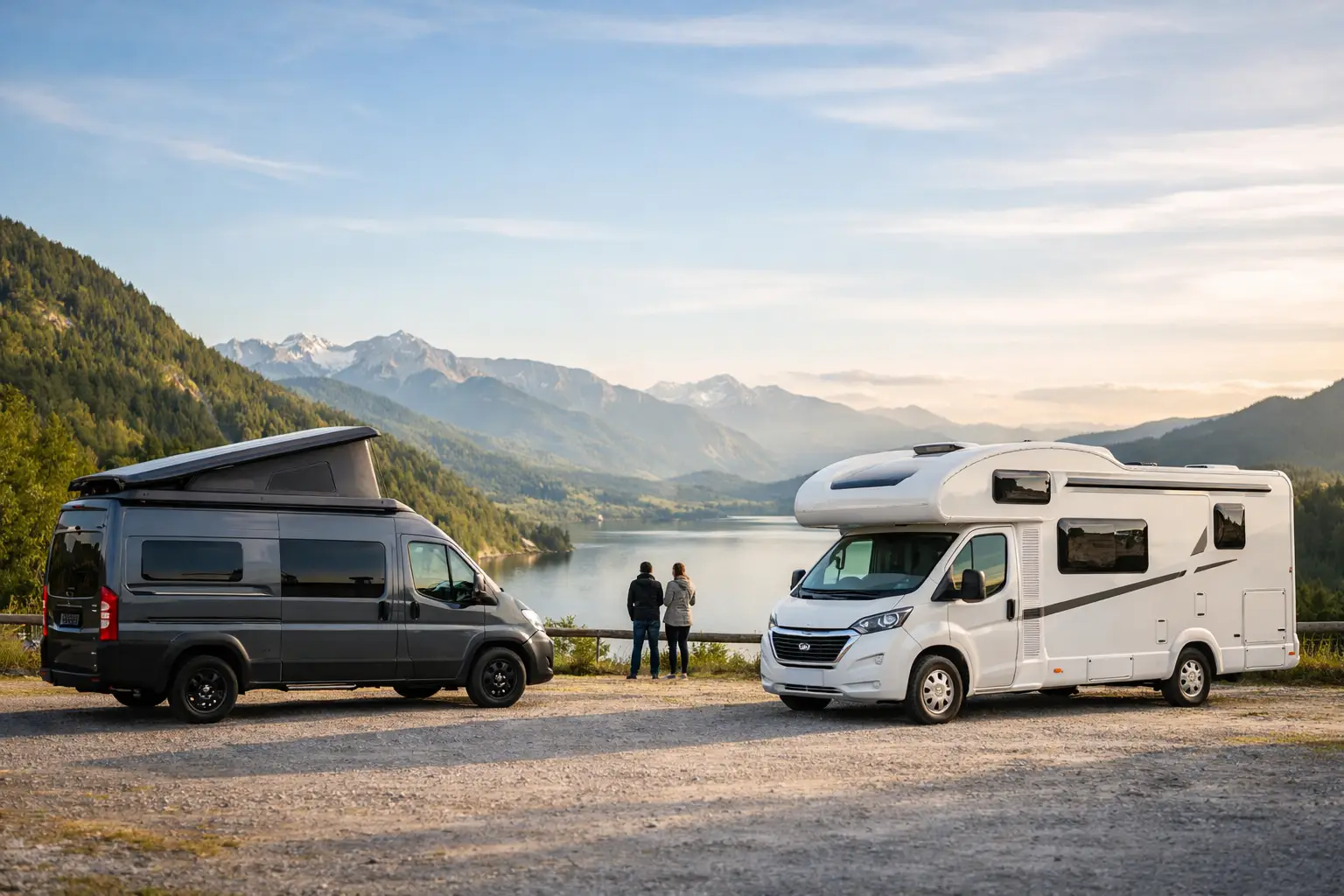
The pitch by the lake is quickly found, the awning is out, dinner smells wonderful – but which vehicle gets you there most comfortably? The question of panel van or motorhome isn't only about vehicle length and number of beds. It's about how you want to travel: spontaneously as a couple, with children and a dog, for a long weekend or several weeks across Europe.
Both types of vehicle make you independent. But they differ markedly in everyday practicality, sense of space, storage and driving comfort. If you weigh up these differences honestly before renting or buying, you'll make a decision that is still a pleasure after many kilometres.
Panel van or motorhome: the key difference
A panel van conversion (Kastenwagen) is originally a van that has been converted into a camper. Kitchen, sleeping places, seating area, bathroom and storage are compactly integrated into the body. From the outside it often looks inconspicuous and usually stays under six metres in length. That makes it manoeuvrable and pleasant for everyday use.
By "motorhome", many travellers mean semi-integrated or fully integrated motorhomes. They are built specifically as living space on wheels and, thanks to their wider body, usually offer more room, larger beds and considerably more storage. A semi-integrated motorhome combines a cab with a built-on living area. Fully integrated models have a continuous, spacious vehicle cabin and are aimed mainly at campers with high comfort expectations.
Neither concept is better in principle. A panel van scores with freedom on narrow roads, a larger motorhome with freedom inside. The right choice depends on your travelling party and your personal camping style.
When a panel van is the better choice
The panel van suits couples, solo travellers and active holidaymakers especially well, who want to be on the move rather than stay in one place for long. Whether it's a stroll round town, a mountain pass or a small pitch by the water: the compact dimensions make driving and manoeuvring easier. Car parks, ferries and toll routes are also often simpler to use than with a larger motorhome.
Compared with many semi-integrated vehicles, a panel van feels more like a car. Beginners in particular quickly gain confidence behind the wheel as a result. If you also want to move the vehicle occasionally at home or park it in an ordinary driveway, you'll appreciate this everyday practicality too.
Inside it is cosy but compact. Modern layouts use every centimetre sensibly: swivelling cab seats, clever folding tables, drawers in the kitchen and a functional bathroom make the space surprisingly complete. For two people this is often perfectly enough on the road – especially if you live outdoors a lot and use campsites or pitches as a base for excursions.
The limits of compact travel
A panel van requires some organisation. In bad weather the two of you sit closer together, and with wet outdoor gear, a dog basket or larger shopping, storage space quickly runs short. The bathroom is practical but considerably smaller than in many motorhomes. Depending on the layout, the beds are also narrower or need a small conversion in the evening.
For families, a panel van can work if the children are still small and you deliberately travel minimalistically. With teenagers, lots of luggage or two large dogs, though, it often gets tight. Then a model with more living space is usually the more relaxed solution.
What speaks for a larger motorhome
If you spend a lot of time in the vehicle on holiday, you notice the advantage of a semi-integrated or integrated motorhome straight away. The seating area is more generous, the kitchen offers more worktop space and the beds are often permanently usable. That saves effort in the morning and evening and makes rainy days much more pleasant.
Families benefit especially from extra sleeping places, larger fridges and more storage space. Clothes, toys, camping furniture, bikes and travel provisions can be stowed better without the living area looking overloaded. There are often separate areas so that children can sleep while the adults are still sitting together.
For longer journeys, too, the extra space is a real comfort gain. If you're away for three or four weeks, you don't want to rearrange every jacket and every pot daily. A motorhome offers reserves – and those reserves bring more calm on tour.
More comfort also means more vehicle
Living comfort has its price: larger motorhomes are wider, longer and taller. In historic city centres, on narrow country roads or in full car parks, more attention is needed. Many drivers get used to it quickly, but vehicle size is still a topic you shouldn't underestimate.
Added to that are usually higher purchase, running and sometimes ferry costs. The parking space at home must also fit. For some travellers it is clearly worth it because they make intensive use of the space and equipment. If you mainly plan weekend trips for two, you may instead be paying for comfort you rarely use to the full.
Your travelling party has a say too
For two people, the choice is especially open. Do you like to travel spontaneously, do many stages and also want to head into town now and then? Then a lot speaks for a panel van. Do you, on the other hand, like to spend several days in one place, often cook for yourselves and want to sit comfortably in any weather? A semi-integrated motorhome may suit better.
For families, it isn't only the number of approved seats and sleeping places that counts. Also ask yourself where jackets, shoes, child seats and toys will go on the road. Check that the beds really fit your height and whether everyone can eat at one table. A vehicle can have four sleeping places on paper and still feel too small for four people in daily use.
Dog owners should think about the dog's resting place too. A dog needs a safe, well-ventilated spot without blocking the aisle. For large dogs, a roomy rear area or a suitable garage is often more helpful than the shortest possible vehicle length.
Rent before you buy
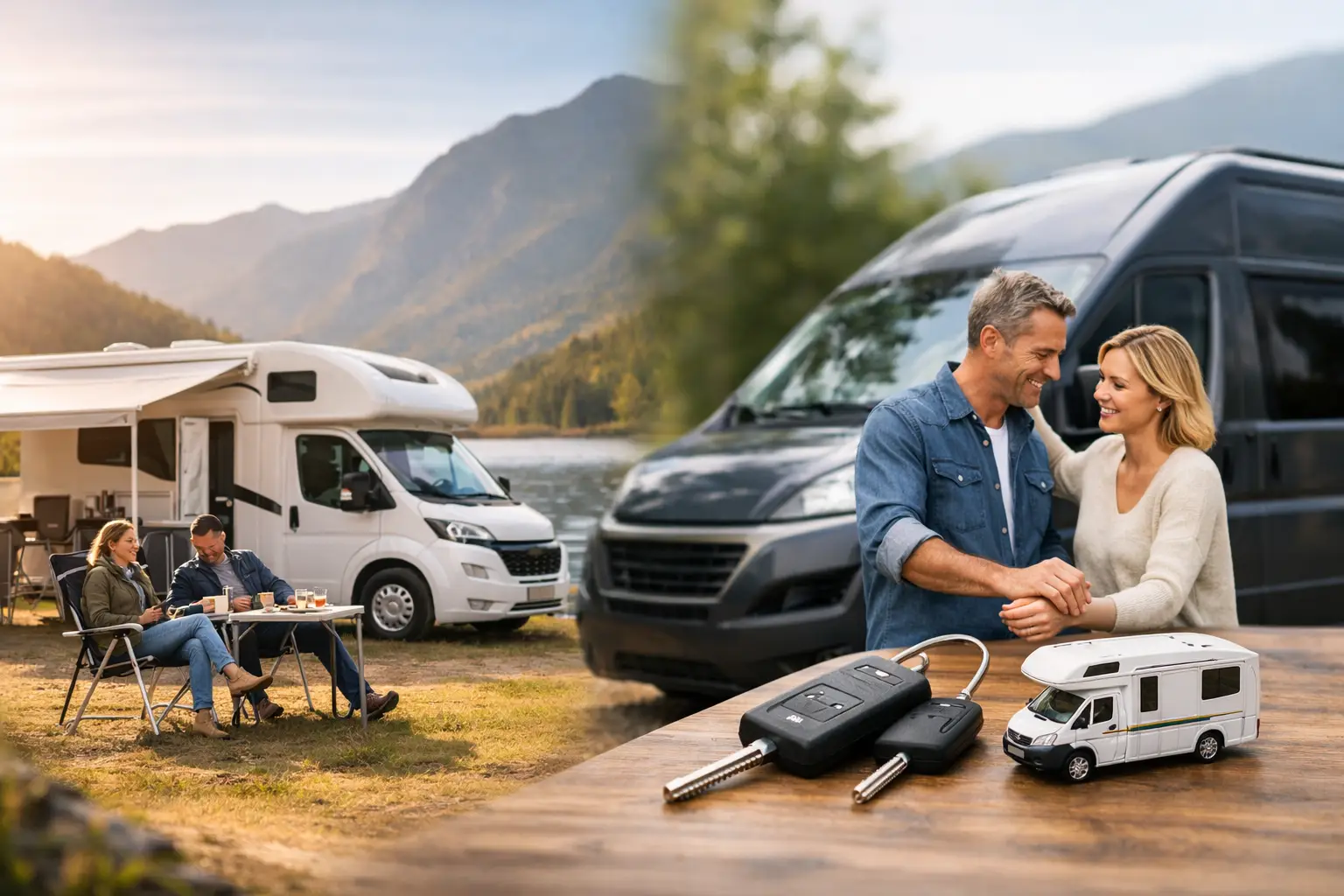
Photos and floor plans give a first orientation. How a vehicle actually feels, though, you only find out on a trip. A rental tour over a long weekend is therefore a smart aid to deciding. Deliberately drive cross-country once, park on a tighter pitch, cook in the vehicle and spend an evening in it in the rain.
Afterwards, note honestly what you missed and what you didn't use at all. Was the seating area too small? Would a more compact vehicle have given more confidence when manoeuvring? Was the storage space enough? Experiences like these are worth more for a later purchase decision than any vehicle list.
At Friedas Camper in Kempen, different vehicle concepts can be rented and compared. Personal advice helps you choose the right size not by gut feeling alone but according to your actual travel plans.
What to look for at a viewing
Take your time at a viewing and don't test the vehicle only while it's standing still. Sit at the table, lie on the bed to try it and open all the cupboards. Also look at details that become important on the road: can you use the shower comfortably? With the bed set up, can you still reach important storage compartments? Are there enough sockets and room for your clothes?
Also pay attention to the permitted gross weight. Additional equipment, bikes, luggage, water and passengers add up quickly. Families in particular should clarify payload early, so that the journey is not only comfortable but also safe and compliant with the rules.
Technology and service are part of the decision too. A reversing camera, solar system, bike carrier or an a retrofit for greater independence can greatly improve camper life. What matters is that accessories suit the vehicle, your use and the permitted payload.
Decide by your holiday, not by the brochure
The panel van is the right travel companion for anyone who wants to travel compactly, flexibly and without fuss. The larger motorhome comes into its own when space, living comfort and storage for the family, dog or long journeys matter more than maximum manoeuvrability.
Don't just picture the loveliest summer day. Think of the rainy day, parking at the supermarket, wet walking boots and the evening when everyone wants to be in the vehicle at once. If your dream vehicle feels good in those moments too, you're already very close to freedom on four wheels.