Motorhome Workshop for Campers in Kempen
When the leisure battery is weak before departure, the heating strikes or the brakes are due, anticipation quickly turns into planning stress. A motorhome workshop for campers makes sure your motorhome is technically ready – for a weekend trip to the North Sea as much as for the big tour through Europe. What matters is not only that a problem gets fixed. You need a workshop that understands the vehicle and the living body equally well.
Why a specialist motorhome workshop matters
A campervan is more than a van with a bed. Chassis, engine and brakes must work reliably, and on top of that come the gas supply, water system, heating, electrics, windows, roof vents and furniture in the body. These areas interlock. If you look only at the vehicle technology, you often overlook the cause of a problem in the living area – and vice versa.
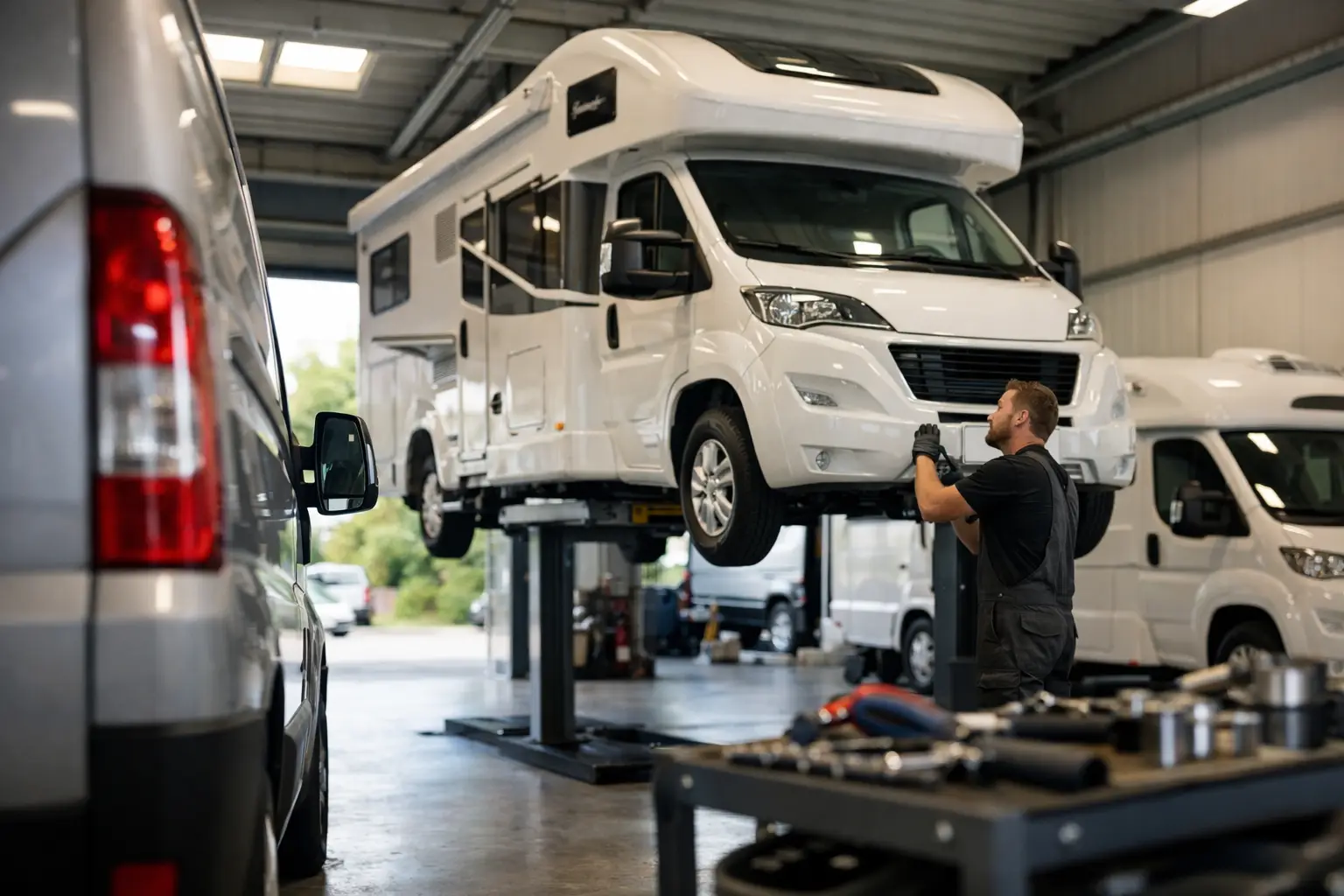
A specialist workshop therefore works differently from a business that mostly looks after cars. It knows typical weak points of motorhomes, knows how sensitive seals and plastic parts can be, and takes into account the vehicle's higher weight and unusual dimensions. With panel vans, semi-integrated and fully integrated motorhomes in particular, accessibility, construction and technology differ considerably.
For you that means: repairs are explained in a way you can follow, servicing is not based on mileage alone, and retrofits are planned so that they suit your travel routine. In the best case that saves not only money but also lost holiday days.
These jobs belong on the workshop plan regularly
Not every item is due every year. How often your vehicle should come in for a check depends on its age, mileage, time standing unused and whether it is kept outdoors or under cover. Before the main season, however, is a good time to have your motorhome checked thoroughly.
In classic vehicle servicing , the focus is on oil change, brakes, tyres, lighting, fluid levels and, where applicable, the timing belt according to the manufacturer's specification. With a campervan, the living body is added. Leak checks are particularly important, because moisture often works unnoticed. A small defect on the roof, a window or an outer wall can develop into an expensive problem over months.
The gas system also deserves attention. Depending on the equipment, it supplies the heating, fridge and hob. Inspection intervals and legal requirements can change, so a quick check before planning your trip is worthwhile. A knowledgeable workshop can tell you what specifically applies to your vehicle and whether regulators, hoses or other components should be replaced.
A look at the battery and charging system is equally sensible. Many campers stand idle for a long time in winter. The starter battery then loses performance, while the leisure battery can also be damaged by constant drains or incorrect charging. If you check early, you do not start your holiday with an unexpected breakdown.
When you should not wait for the next appointment
Some warning signs you should take seriously even if the next inspection seems far off. These include unusual noises when braking or driving, a warning light in the cockpit, water stains inside, a noticeably weak 12-volt supply or the smell of gas. If you smell gas: stop using the system, turn off the cylinder, ventilate well and have the vehicle checked professionally.
A check is also worthwhile after contact with a branch, a bollard or a low underpass. A scratch on the body sometimes looks harmless, but can have damaged a seal. The same goes for a roof vent that came loose in a storm, or a window that no longer closes properly.
If the heating runs only irregularly, the fridge does not switch over to gas or the water pump keeps starting up, there does not always have to be a major defect behind it. That is exactly why systematic fault-finding makes more sense than replacing parts on suspicion. A good workshop explains which cause was identified and which solution is economical.
Retrofits: more comfort, but suited to the vehicle
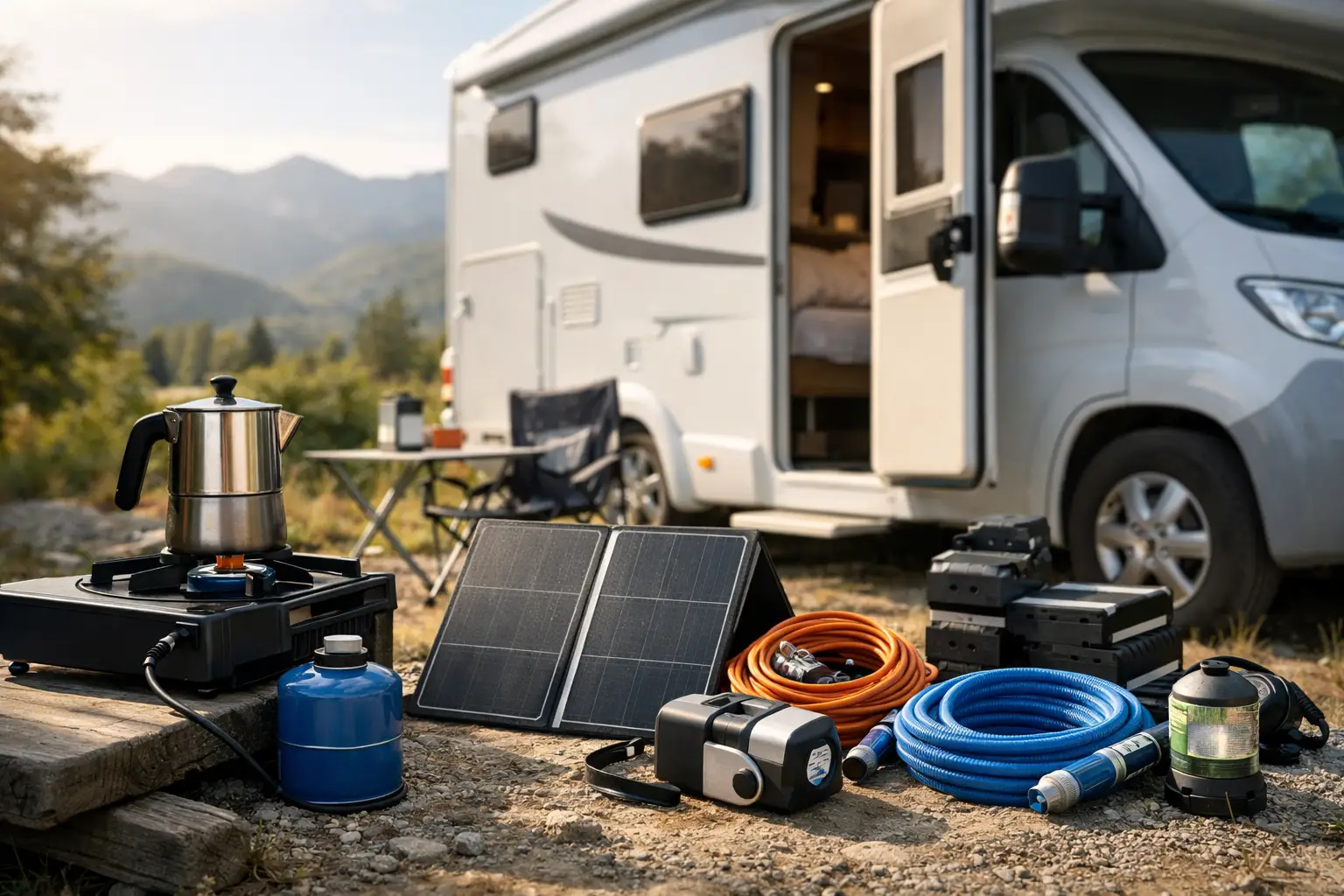
Many improvements to a campervan make travelling much more pleasant. A solar system can make you more independent of mains hook-up, an inverter powers selected appliances, and a reversing camera reduces stress when manoeuvring. Bicycle carriers, awnings, air suspension, satellite systems or additional sockets are also popular retrofits.
Whether a solution is worthwhile depends on how you travel. If you mostly stay on campsites, you usually do not need a particularly large solar system. If you often stay off-grid for several days away from mains hook-up, on the other hand, you benefit from a carefully matched combination of battery, solar controller and charging options while driving.
With a bicycle carrier, payload and permissible axle loads play an important role. A stronger battery alone is not a good solution if cable cross-sections, charging boosters or fusing do not match. And an awning should be fitted professionally so that the body and its watertightness do not suffer. The best retrofit is therefore not the one with the most extras, but the one that is technically cleanly integrated and really takes work off your hands on the road.
How to recognise a good campervan workshop
The cheapest quote is not automatically the best decision. For work on a motorhome, experience, transparent communication and realistic scheduling count. Feel free to ask whether the business regularly works on motorhomes and panel vans and whether the body, electrics and gas supply are also covered.
Also pay attention to how specific the advice is. Are possible causes explained in a way you can follow? Do you get an assessment of costs and scope before larger jobs? Does the workshop let you know if additional damage turns up during diagnosis? These points build trust – especially when the vehicle needs to be ready for use again before a firmly booked trip.
A provider that supports servicing, repair and retrofits from a single source is practical. That way you do not have to look for a different address for every question, and your vehicle's history stays traceable. At Friedas Camper in Kempen , exactly this service mindset is at the centre: from the technical check through repairs to individual equipment for your next tours.
Well prepared for the workshop appointment
The more precisely you describe a fault, the faster the diagnosis can succeed. Note when the problem occurs: only with the engine running, only on gas, after rain, in the cold or only after a few hours standing? Photos of damp, error messages or damaged parts help too.
Do not empty the whole campervan before the appointment, but create access to the affected areas. If the leisure battery is under the seat or something is dripping in the rear storage space, the workshop should be able to check there without much effort. Also remember the keys for outside hatches, the vehicle papers and any documents about earlier repairs or conversions.
With retrofits, it helps not just to name a product you want, but to describe your travel plans. Do you travel with children, a dog or e-bikes? Do you often stay off-grid or prefer stopovers and campsites? Do you need more power for working from home, or mainly better visibility when reversing? These answers lead to a solution that suits your campervan life.
Servicing is part of looking forward to your trip
A workshop appointment takes time, no question. But it is usually much more relaxed than a breakdown on the motorway or water damage in the middle of your holiday. If you plan early, you can secure appointments before the season, have necessary parts ordered in good time and set off with a good feeling.
So do not look at your campervan only when the route is already fixed and departure is imminent. A short technical check a few weeks beforehand leaves room for repairs and gives you the freedom to look forward again to what matters: turning the key, setting off and staying on the road exactly where you like it.