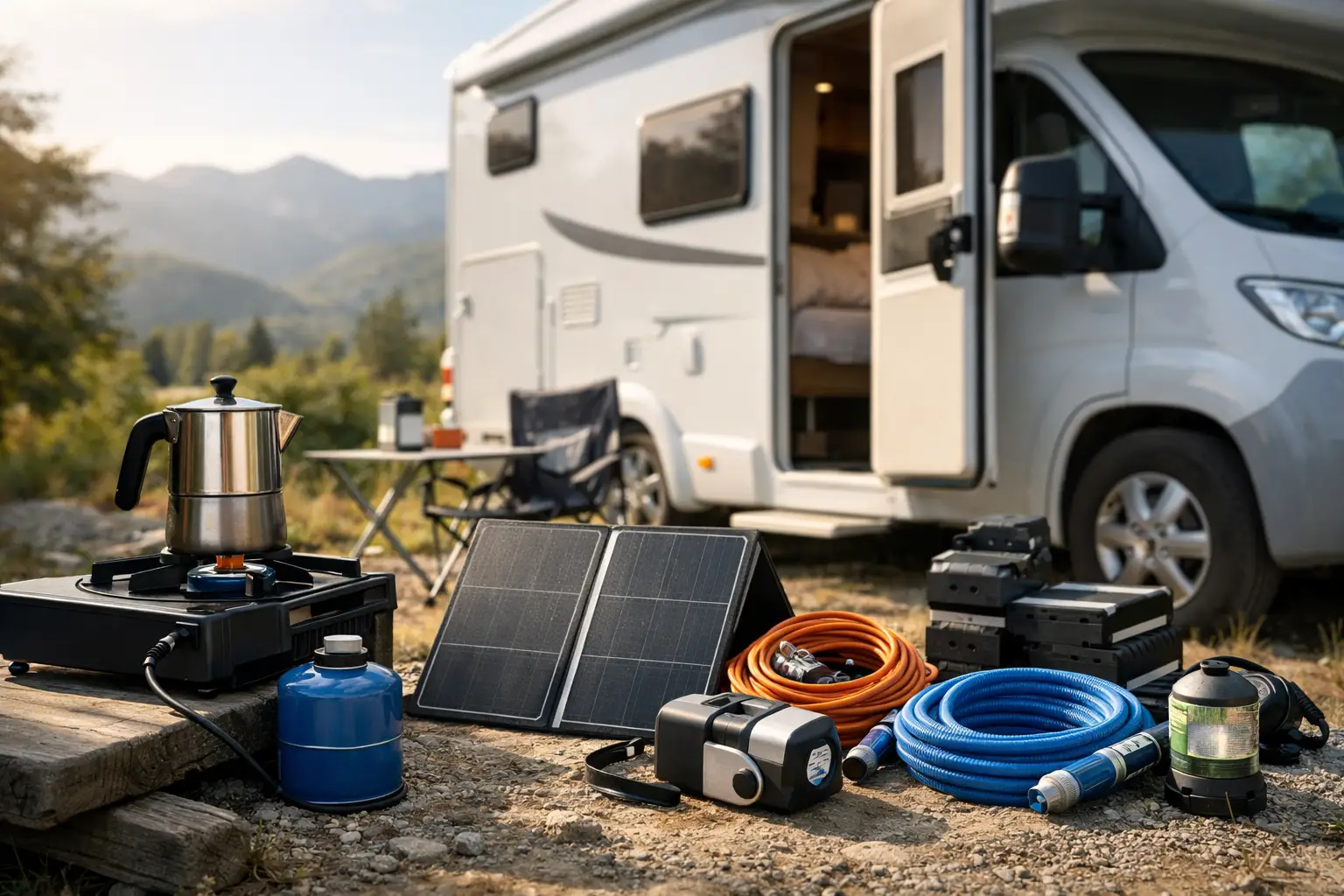
What Does Camper Maintenance Really Cost per Year?
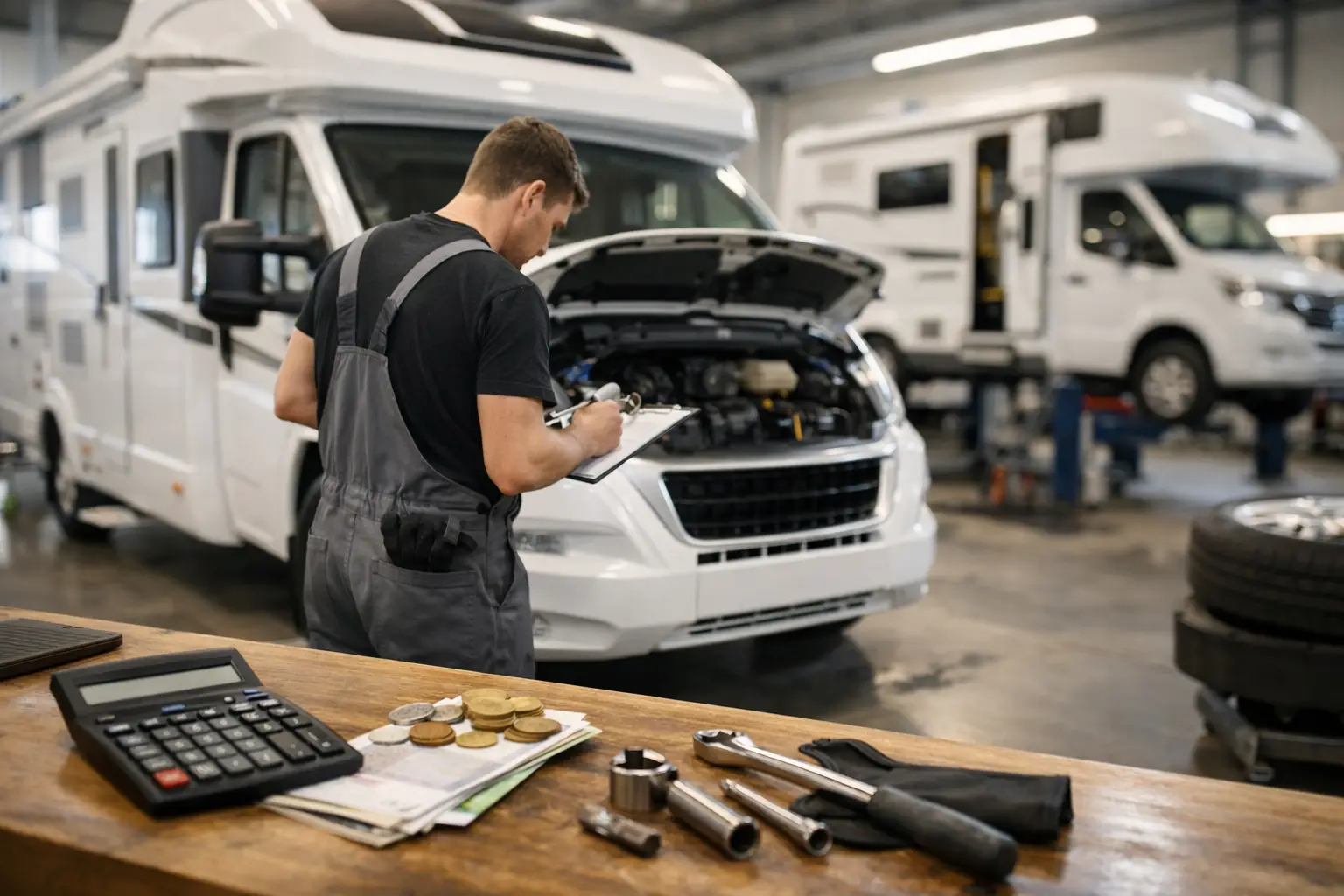
The question "What does motorhome maintenance cost?" often only comes up when the first warning light comes on or the holiday is already around the corner. Yet with a realistic maintenance budget you can plan with peace of mind. Having your motorhome checked regularly not only protects its value, but also makes sure the water, heating and engine work when you are heading for the sea, the mountains or your weekend pitch.
What to expect when budgeting for camper maintenance
There is no one-size-fits-all answer. A new panel van with low mileage needs something different from a ten-year-old semi-integrated motorhome that is on the road for many months of the year. The base vehicle, engine, coachbuilder, annual mileage and equipment all play a part too.
As a rough guide, camper owners should usually set aside between €400 and €1,000 a year for regular maintenance. This covers typical standard work, but not larger repairs such as the clutch, timing belt, air conditioning or a new fridge. For an older vehicle or one with high mileage, the budget can be considerably higher.
It is important to distinguish between maintaining the base vehicle and caring for the living area. After all, a motorhome is both: a vehicle for the road and a small home on wheels.
What does camper maintenance cost in detail?
Servicing the base vehicle
Oil change, filters, brakes, fluid levels and the general vehicle service follow the manufacturer's specifications for the base vehicle. Depending on the engine, oil quantity and scope of work, costs are often around €250 to €600. On modern diesel vehicles, high-quality oils, filters and additional work alone can affect the price.
Then there are wear parts that do not fall due every year. Brake pads, brake discs, tyres or a new starter battery can noticeably increase the bill. That is why it pays to keep an eye on service intervals not just by the calendar, but also by mileage.
Servicing the habitation area and onboard systems
In the living area, it is about things that quickly become very important on a trip: water supply, heating, fridge, electrics, windows, roof vents and seals. A visual and functional check of the habitation area often costs €150 to €400.
It is particularly worthwhile before a longer trip or after the winter break. A roof vent that sticks, a dripping tap or a weak leisure battery are small problems as long as they are spotted in the workshop. On a pitch, they can put an unnecessary damper on your holiday.
Damp check: small price, big impact
Moisture is one of a motorhome's most expensive enemies. Water can get into the body through damaged seals, fitted parts or hairline cracks – often unnoticed. A professional damp check costs around €100 to €180.
On newer vehicles, it is often a requirement for keeping the manufacturer's water-ingress warranty. Don't just look at the price here. What matters is that the check is properly documented and that any findings can be assessed straight away. A seal replaced in good time is far cheaper than an extensive repair of a wall, floor or roof.
Gas check and gas system
Depending on the vehicle, gas powers the heating, hot water, hob and fridge. Since 2025, a regular inspection of the LPG system has been mandatory for motorhomes and caravans. It generally falls due every two years and is independent of the TÜV inspection (Hauptuntersuchung).
You should usually budget €50 to €80 for the check. If hoses, pressure regulators or other components need replacing, materials and labour come on top. Especially ahead of the cooler travel season, reliable heating is not a side issue, but a real factor for comfort and safety.
Factors that change maintenance costs
The cheapest service appointment is not automatically the right one. A fair price comes from only doing the work that is necessary, while the workshop takes a close look at where the risks lie. Four points have a particularly big influence on the bill:
- Age and mileage: As a vehicle gets older, the inspection effort and the likelihood of wear-related repairs usually increase.
- Vehicle type: A large fully integrated motorhome often has more technology and more bodywork surface than a compact panel van.
- Use: Year-round campers, winter holidaymakers and high-mileage drivers put more strain on brakes, tyres, batteries and seals.
- Equipment: A solar system, inverter, awning, levelling jacks, air conditioning or satellite system add comfort, but also need checking and care.
Where you store it also makes a difference. If the motorhome is permanently parked outdoors, seals, tyres and bodywork are more exposed to the weather. A dry storage space, regular airing and sensible winter preparation help to limit later costs.
Three realistic examples for your annual budget
An almost new panel van that covers about 8,000 kilometres a year often gets by with a vehicle service, a damp check and smaller checks. Roughly €450 to €750 is a plausible range for that. If the gas check falls due in the same year, it comes on top.
For a family motorhome covering 15,000 to 20,000 kilometres a year, the service, habitation check, gas check and first wear parts can quickly reach €800 to €1,300 . That does not have to be a sign of a problematic vehicle. Brakes, tyres or batteries simply have a limited lifespan.
An older motorhome can be just as inexpensive as a new one in a good year. In a year with new tyres, brakes, sealing work or problems with the heating and fridge, however, €1,500 or more is possible. If you are buying a used motorhome, you should therefore always plan a reserve for the first season on top of the purchase price.
Where saving makes sense – and where it doesn't
Doing the work yourself can make sense for simple jobs. Cleaning the water tank, caring for seals, oiling hinges, checking tyre pressure and charging the battery correctly are all part of a good camper routine. Regular visual checks help too: are the windows and roof vents watertight? Does water drain away where it should? Are there unusual noises or warning messages?
For brakes, gas, electrics, moisture or manufacturer requirements, a specialist workshop is the better choice. Skipping a damp check or service often only saves money in the short term. The risk is consequential damage, a loss of value when you sell, or a fault just when the trip is supposed to begin.
It is practical to combine service appointments with other work early on. If the vehicle is in the workshop anyway, a retrofit, a habitation check or the replacement of worn small parts can often be bundled sensibly. This does not necessarily save every minute of labour, but it usually saves extra trips and time.
How to keep your camper ready to travel
It is best to schedule the annual service before the main season, not just before the summer holidays. That leaves time if spare parts need to be ordered or repairs carried out. For the damp check, gas check and servicing, choose a workshop that understands both the base vehicle and the living area.
At Friedas Camper in Kempen, you get this service from a single source – from inspection and repairs to suitable retrofits. That leaves more time for what camping is all about: get in, drive off and enjoy the freedom of the road with a good feeling.