Renting a Motorhome with a Child: Set Off Relaxed
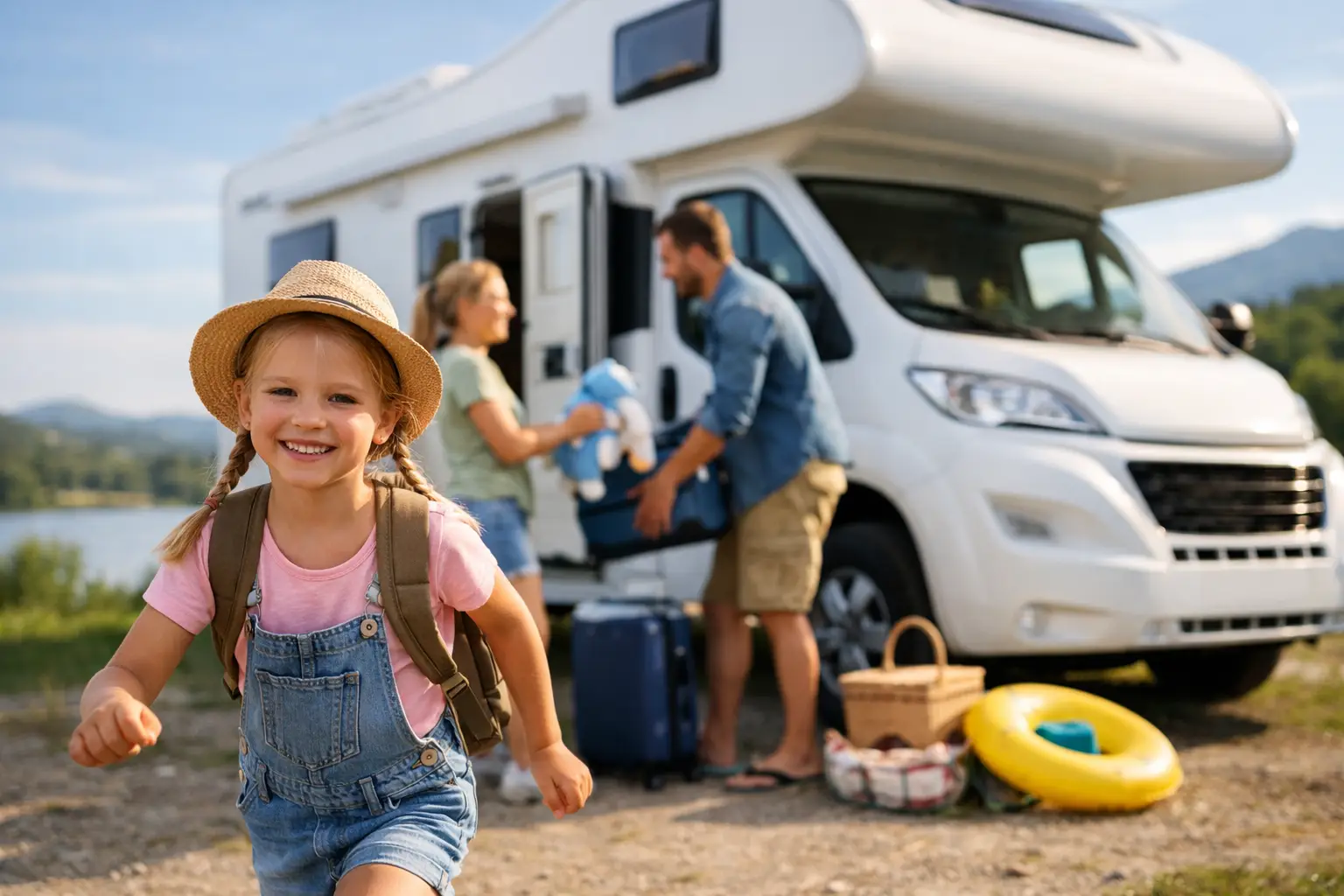
For families, the first holiday in a campervan often begins with a very practical question: who actually sleeps where? If you want to rent a motorhome with a child , you do not need to be a camping pro. What matters is a vehicle that suits your family's everyday life – with enough berths, storage space, an uncomplicated kitchen and room for breaks when the mood tips on the road. Then the journey to your holiday becomes part of the trip.
Choosing the right motorhome for your family
Not every motorhome with four registered seats is automatically equally comfortable for four travellers. So do not just look at the number of people in the vehicle description, but at the layout. Especially with younger children, it makes a big difference whether beds are quickly ready in the evening or the whole seating area first has to be converted.
Fixed sleeping places are particularly pleasant for families. A rear bed gives parents a quiet retreat, while children can sleep in a drop-down bed or in converted single beds. If a baby or toddler is travelling, it should be clear before booking where a travel cot can safely go. A bunk bed at the rear can be practical for siblings, but takes up storage space depending on the model. So it depends on what matters more to you: plenty of luggage space, separate sleeping areas or as much freedom of movement as possible in the living area.
The registered seats with seat belts count too. Child seats and baby car seats usually need a three-point belt and enough depth on the bench seat. Also check whether the seat can be fitted without contortions and whether no table or piece of furniture gets in the way while driving. These questions seem small, but on the road they decide comfort and safety.
Panel van or semi-integrated motorhome?
A panel van drives compactly and is pleasant on narrow roads, ferries or city car parks. For a small family with one child, it can be the right choice if you tend to pack light, change location often and do not want to spend long rainy days in the vehicle.
A semi-integrated motorhome often offers more living space, larger beds and additional storage compartments. For two adults with two children, that is usually the more relaxed solution, especially on a longer trip. In return, the vehicle is larger and needs a little more attention at some campsites or when manoeuvring. The best vehicle size is not automatically the biggest, but the one that suits your route and your family life.
Renting a motorhome with a child: equipment that really helps
Children do not need a great deal on holiday, but the right things at the right time. A fridge saves spontaneous shopping searches, the kitchen helps when hunger strikes between two outings, and a bathroom on board can be worth its weight in gold at night or on long stages. When choosing a vehicle, look for sensible kitchen equipment, enough fresh water and a heating system if you are setting off in spring or autumn.
Storage space is no luxury for families. Jackets, rainwear, toys, food and camping furniture fill cupboards faster than you think. A large rear storage space is practical for a balance bike, scooter or pushchair. Even so: not everything has to come along. Less luggage means less searching and more room to live.
At Friedas Camper you receive a personal briefing on the rental vehicle. Use this appointment deliberately: ask about gas, heating, fresh and waste water, electric hook-up, awning and the special features of the layout. Have them show you how windows, insect screens and blinds work. If children are travelling, it also helps to set up the beds once at handover. That takes a lot of rush out of the first evening at the campsite.
Safety starts before departure
A motorhome behaves differently from a car. It is taller, heavier and needs a longer braking distance. So deliberately plan the first stage short. That way you can get used to the dimensions, mirrors and driving feel in peace, without a tired child, heavy traffic and the search for a pitch all coming together at once.
All passengers must be seated and belted while driving. That applies even if the place in the living area looks ever so cosy. Children may only travel in suitable, correctly fixed child seats or baby car seats. Before every departure, check that cupboard doors are closed, loose items stowed and the table, cables and toys safely put away. A heavy toy car in the footwell quickly becomes a risk in a hard stop.
Also check weight and payload. Families in particular underestimate how quickly the maximum permissible weight is reached. Bicycles, full water tanks, camping chairs and food add up. Pack heavy items as low as possible and close to the middle of the vehicle. For the journey out, a partly filled fresh water tank is often enough, provided you can reliably top up with water at your destination.
How to keep driving days family-friendly
With a child, the shortest route is not always the best route. A six-hour drive can look realistic on the sat nav, but take much longer with breaks, traffic jams and lunch. Plan shorter stages and a buffer instead. Two to three hours at a stretch is plenty for many children before they need to move.
Breaks work better when they have a small goal: a playground, a lakeside, a viewpoint or a rest stop with a meadow. Instead of constantly watching the clock, it is worth following your child's rhythm. Some families start early and use the afternoon nap for a quiet stretch. Others set off only after breakfast and stay longer at the campsite in the afternoon. Both can work well.
Prepare snacks and drinks within reach, but not loose in the cab. A small bag with fruit, sandwiches, wet wipes and a change of clothes prevents many unnecessary stops. Audio stories, books and a favourite cuddly toy help too. Screen time can make sense on long stretches – it does not have to replace the whole entertainment programme, but it can be a practical relief.
Campsite or motorhome stopover? With children, the surroundings count
For the first nights, a family-friendly campsite is often more relaxed than a simple motorhome stopover (Stellplatz). Sanitary facilities, play options, electricity, a washing machine and a clearly bounded site make it easier to start. Even if your motorhome has a bathroom, many families enjoy generous showers and short distances to the playground.
Stopovers, on the other hand, are ideal for an overnight stop along the way or if you want to stay flexible. They are often close to towns, lakes or sights and offer exactly the infrastructure you need for one night. With small children, however, you should check whether the site is on a noisy road, whether there are safe walkways and whether a quiet night is realistic.
On the campsite, consideration works both ways. Children may play and laugh, but at the same time access roads are not play streets. Explain early where they may move around and that other travellers need privacy. If you do not use the awning as a football goal and calm down in good time in the evening, you will soon be chatting with your neighbours.
Packing without overloading the motorhome
The best packing list is based not on every conceivable situation, but on your type of trip. If you head to a well-equipped campsite in summer, you need less than on a spring tour with many nights at stopovers. Layered clothing, sturdy shoes, rain jackets and a small supply of medication almost always belong.
For children, a small travel bag of their own with familiar things works well. A favourite book, drawing materials, a torch and a few robust toys are often enough. Rather take things that work outdoors: a ball, chalk, a card game or a magnifying glass. Large toy boxes seldom bring more joy, but almost always more mess.
Think too of the little things of campervan life: a night light, a step stool for the washbasin or bed, reusable drinking bottles, sun protection and a small hand brush set. Wet shoes, sand and crumbs are part of a family trip. If you can get rid of them without much effort, the mood stays more relaxed.
Room to breathe instead of a perfect travel plan
A campervan holiday will rarely go exactly as planned. A rainy day stretches breakfast, a child wants to stay longer at the lake or the pitch you picked out is already full. That is exactly what a motorhome gives you the freedom to adapt to. Keep the route rough, but leave air between the fixed destinations.
For beginners, it is worth staying in the same place for the first two nights. You get to know the vehicle, do not have to pack up again straight away and get a feel for electricity, water and routines. After that, moving on is easier. And when the return journey is due, plan time for that too: refuelling, disposal, cleaning and returning the vehicle should not turn into a last hectic stage of your holiday.
A family holiday in a motorhome does not have to be perfectly organised to be remembered for a long time. If the vehicle suits you, the first stage stays relaxed and there is enough room for breaks, freedom begins not only at your destination – but as soon as you set off.