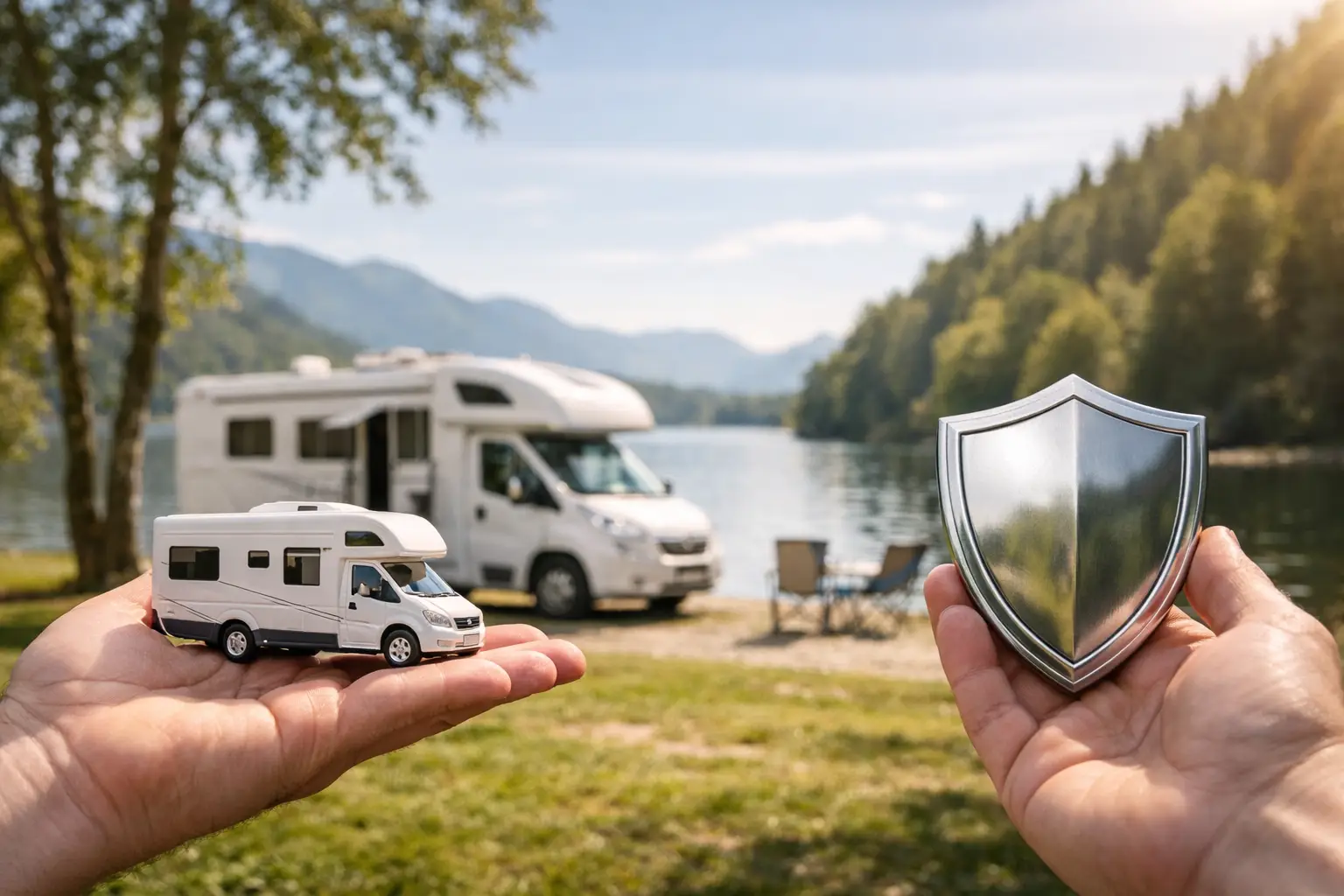
Comparing Fully Comprehensive Motorhome Insurance the Right Way
A scratch on the awning while manoeuvring, a stone chip on the motorway or damage after a violent storm: with a motorhome, freedom on the road comes with responsibility. A careful fully comprehensive motorhome insurance comparison helps you choose your travel cover by more than price alone. What matters is what is really covered in an emergency, which deductible (Selbstbeteiligung) applies and which conditions you should know before setting off.
With high-value motorhomes especially, repairs can quickly become expensive. If you want to enjoy your holiday in peace, you should look closely – whether with your own vehicle or when renting.
What fully comprehensive cover generally covers on a motorhome
Fully comprehensive insurance (Vollkasko) usually builds on partial cover (Teilkasko). While the latter often covers damage from theft, broken glass, fire, storms, animal bites or collisions with wildlife, fully comprehensive cover also applies to accidents you cause yourself and to vandalism.
This is particularly relevant for campers: the vehicles are larger than a car, have expensive bodywork and are often driven on unfamiliar roads. A bollard in the blind spot, a tight campsite or a branch damaging the body is all it takes. Fully comprehensive cover can then limit the financial consequences considerably.
Even so, fully comprehensive is not all the same. Insurance policies sometimes differ considerably in deductible, components included, circle of drivers and exclusions. The cheapest premium is therefore not automatically the best choice.
Fully comprehensive motorhome insurance comparison: what matters
A sensible comparison starts not with the annual premium but with how you actually travel. Do you travel a few weeks a year, or are you on the road for several months regularly? Will only you and your partner use the motorhome, or might your adult daughter take the wheel too? Depending on the answer, you need a different policy.
Choose the deductible realistically
The deductible is the amount you pay yourself in the event of a claim. Policies with a high deductible usually cost less but can weigh noticeably on you after an accident. With minor manoeuvring damage, a deductible of €1,000 can greatly reduce the benefit of the insurance.
For many campers, a middle way makes sense: an affordable annual premium with a deductible that doesn't become an unpleasant surprise on holiday. Check whether different amounts apply to partial and fully comprehensive cover. A separate deductible for glass damage may also be provided.
New-vehicle value, replacement value and purchase price
For newer motorhomes, so-called new-price compensation (Neupreisentschädigung) is an important topic. If a young vehicle is stolen or written off, the new value may be better covered in the first months or years than just the vehicle's current value. How long this arrangement applies differs from contract to contract.
For used motorhomes, by contrast, the replacement value (Wiederbeschaffungswert) is what counts. Check whether the insured value matches the current market situation and the equipment. After all, solar system, awning, bike carrier, air suspension or high-quality multimedia upgrades increase not only comfort but often the vehicle's value too.
Don't forget permanently installed equipment
A motorhome doesn't consist only of a cab and body. Kitchen, bathroom, heating, furniture, on-board technology and permanently mounted accessories are part of the whole vehicle. Good policies state the cover for these components clearly.
With accessories fitted afterwards, a close look is especially worthwhile. Some insurers require conversions or value-adding add-ons to be reported. If you document your equipment, keep invoices and have up-to-date photos, you are much better prepared in the event of a claim.
Check the circle of drivers and minimum age
A common stumbling block lies not in the damage but in the driver rules. Many contracts define exactly who may drive and what minimum age or driving experience is required. If an unregistered person drives, it can become expensive – even if fully comprehensive cover exists in principle.
This also applies to rental vehicles. Before handover, it should be clear which people are registered as drivers, whether a minimum age applies and which licence category is needed. If you clear this up properly before the trip, you avoid arguments at the roadside or after a claim.
Typical exclusions you should know about
Fully comprehensive cover protects a lot, but not without limits. Damage caused by gross negligence can be wholly or partly problematic, depending on the contract. This can include, for example, driving under the influence of alcohol or drugs, ignoring the vehicle height at an underpass that is too low, or use contrary to clear contract terms.
Normal wear and tear is not an insured event either. If a seal becomes leaky over time or a technical part fails due to age, that is more a matter for servicing, warranty or repair service. Fully comprehensive cover is meant for sudden damage from outside – not as a substitute for regular maintenance.
Also look at the countries in which cover applies. If you want to travel beyond Germany to Scandinavia, southern Europe or non-EU countries, check the international cover beforehand. Depending on your destination, the Green Card may still be sensible or required.
Renting a motorhome has its own rules
With a rental motorhome, fully comprehensive insurance is usually already included in the rental price. The amount of the agreed deductible still matters, though. It determines the maximum amount you have to pay out of your own pocket for damage you cause yourself.
Some travellers want to reduce this sum with additional travel protection. Whether that is worthwhile depends on your personal appetite for risk, the time of travel and the vehicle's value. Don't just read the advertising claim "reduce deductible", but also the terms: Which damage is covered? What proof is required? Are there exceptions for the roof, underbody, tyres or interior?
At Friedas Camper, an easy-to-follow vehicle handover and clear rental terms are part of a relaxed start. Even so, take time for the briefing. Note existing damage, photograph conspicuous spots and have the vehicle height shown to you once more. For your first holiday with a camper especially, these are small steps with a big effect.
Damage on the road: safety first, then documentation
If something happens despite all your care, stay calm. Secure the scene of the accident, help the injured and call the police or emergency services if needed. In an accident involving others, you should take details, number plates and photos without prematurely admitting liability.
If the rental vehicle is damaged, inform the rental company as early as possible. With your own motorhome, report the damage to the insurer promptly. Overview shots of the vehicle and detail photos of the damaged area help with settlement. Also keep receipts, for example for towing, overnight stays or necessary spare parts, provided they are connected with the damage.
You should only arrange a temporary repair if it is necessary for safety or to avoid greater consequential damage. With a damaged window or leaking roof, quick action can be right; with more extensive repairs, approval should be clarified first.
Three questions before you sign up
Before you decide, answer these three questions for yourself: How much could I comfortably pay myself in the event of a claim? Is my motorhome, including all permanent upgrades, valued appropriately? And are all the people who will take the wheel on my trip really allowed to drive?
If these points are properly sorted, insurance becomes not complicated small print but a reliable safety net. That leaves more room for what matters on the road: the first coffee break with a view, spontaneous pitches and the good feeling of simply being able to set off.