Checking a Used Motorhome: Buying Checklist
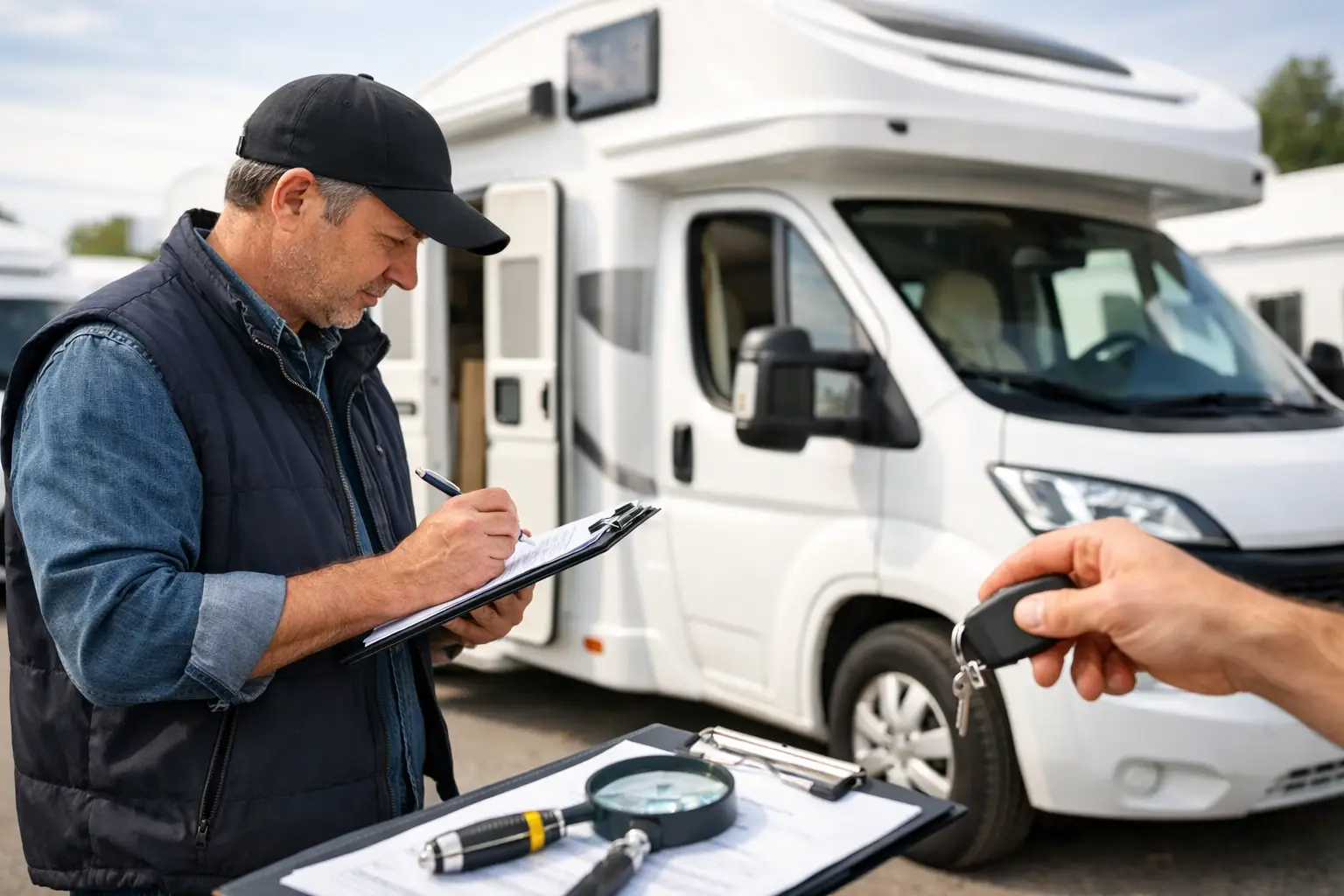
An attractive layout, low mileage and a convincing price can quickly win you over at a viewing. But with a motorhome in particular, the real value is often decided in places you cannot see at first glance. If you want to check a used motorhome, you therefore need a checklist, time and ideally an appointment in daylight. That way your dream of spontaneous weekends and big tours does not turn into an expensive workshop project.
Checking a used motorhome: checklist before the appointment
Quite a lot can be clarified even before the viewing. Ask the seller for the vehicle registration document, TÜV inspection (Hauptuntersuchung) reports, service records and invoices for repairs or retrofits. A complete service history is no guarantee of perfect condition, but it shows whether the vehicle has been looked after regularly.
Also ask about the number of previous owners, how it has been used and how long it has stood unused. A motorhome that stood unmoved outdoors for many months can cause problems despite low mileage. After all, seals, tyres, battery and brakes age even when stationary. If the vehicle was rented out, that is not automatically a reason to rule it out. What matters is traceable maintenance, professional repairs and an overall well-kept impression.
Allow enough time. A quick spin around the block is not enough. Allow at least one to two hours for the viewing, functional check and test drive. Take a torch, a phone for photos, kitchen roll and, if possible, a second person. Four eyes spot more – especially with signs of damp or unusual noises.
Look closely at the body and its watertightness
Damp is one of the biggest risks with a used motorhome. It can spread unnoticed over years and cause expensive damage to walls, floor and furniture. A freshly cleaned interior or an intense room fragrance should therefore not reassure you, but rather make you more alert.
Check the outer skin for cracks, dents, blisters and later added sealing. Look especially closely at roof edges, windows, hatches, roof vents, manoeuvring handles, awning brackets and the transitions between cab and body. Water can get in there if the sealant is porous or an attached part was not fixed cleanly.
Inside, your hands and nose help: do corners, wall areas or the floor feel soft? Does it smell musty? Are there discolouration, bulging surfaces, traces of mould or loose wall coverings? Check storage compartments, bed boxes, the garage and the area under windows. Damp can also hide under mattresses and seat cushions.
A current watertightness certificate is very valuable. Even better is a professional moisture check with a measuring device, especially for older vehicles or if you notice anything that makes you uncertain. Minor cosmetic defects can often be fixed easily. A waterlogged body, on the other hand, is a reason to think very carefully about price, repair effort and your decision to buy.
Do not just switch the equipment on – use it
Many functions seem perfectly fine in a short demonstration. So test everything yourself and do not be fobbed off with the phrase "It has always worked". The equipment on board should work reliably on the road – even when there is no campsite right next door.
These points belong on your checklist:
- Electrics: Do the interior lighting, sockets, USB ports, reversing camera, radio, satellite system and charger work? Check whether the leisure battery charges and how old it is.
- Water system: Fill in some water and open all the taps. The pump should run evenly, without continually topping up. Check the fresh and waste water tanks, drain valves and all visible connections for drips.
- Gas and heating: Have the heating, hot water and hob demonstrated. A valid gas inspection and neatly laid pipes build trust. If you smell gas: do not negotiate, have the cause properly clarified.
- Fridge: Test whether it works on the intended energy sources. With absorption fridges, gas operation should also be checked; with compressor fridges, the power supply and the running noise.
- Bathroom and toilet: Test the flush, cassette compartment, seals and roof ventilation. A well-kept bathroom often says a lot about how the whole vehicle was used.
Also pay attention to the windows and roof vents. They must open, close and lock easily. Brittle insect screens, defective blinds or broken stays are seldom a deal-breaker, but can add up to a lot in total. Make a note of such points rather than keeping them only in your head.
Assess suspension, engine and tyres on the test drive
A motorhome can look very well kept inside and still show weaknesses on the road. It is best to start the engine cold. If it starts badly, smokes noticeably or warning lights stay on, you should ask questions. A look under the bonnet and under the vehicle is also part of it: is there oil loss, corrosion, damaged lines or fresh traces of fluid?
On the test drive, there is more to assess than the driving feel. Deliberately test the clutch, gearbox, brakes and steering on a route with town traffic and a faster stretch. The vehicle should not pull strongly to one side, rumble or vibrate when braking. With an automatic gearbox, gear changes must be smooth.
Check the tyres for more than tread depth. The date of manufacture, the DOT number, is at least as relevant. On little-driven motorhomes, tyres can be old, hard and cracked. As a rough guide: from about six years you should look especially closely, and after eight to ten years at the latest a replacement is often due – depending on condition, use and the manufacturer's recommendation. Also check whether there is a spare wheel or a puncture repair kit.
If you feel unsure about the engine, brakes or underbody, you should arrange an independent vehicle check before buying. That costs money, but can prevent a much higher loss. At Friedas Camper, technical questions about maintenance, repair and retrofits can also be assessed expertly.
Check papers, weight and equipment properly
Compare the vehicle identification number on the motorhome with the papers. Check the registration certificate (Zulassungsbescheinigung), the TÜV inspection date, operating manuals, the number of keys and, where relevant, documents for a tow bar, air suspension, solar system or other conversions. Retrofits are practical, but must be properly fitted and, where necessary, registered.
An often underestimated subject is the maximum permissible weight. Do not just ask about the unladen weight on paper, but think realistically: how many people are travelling, and how much water, luggage, bicycles or dog accessories will come on board? For families in particular, the payload can quickly become tight. A weighbridge ticket brings clarity if in doubt.
Also check whether the seats with belts suit your travel routine. A large bed and plenty of storage space help little if the vehicle is not legally or practically suitable for your family. The driving licence category also plays a role: many motorhomes may only be driven up to 3.5 tonnes with category B. Heavier models often offer more reserves, but frequently require other qualifications.
Assess defects fairly and decide with confidence
No used motorhome is perfect. Small scratches, a weak leisure battery or worn upholstery are often part of the deal, depending on age and price. What matters is whether the seller is open about them and whether you can realistically calculate the follow-on costs. Hidden damp, unexplained warning lights or missing documents, on the other hand, are warning signs that do not disappear because of a supposed bargain price.
Put all promises in writing. If tyres, seals or technical defects are still to be dealt with before handover, the scope and date belong in the purchase contract. A reputable seller gives you room for questions, does not push you to sign and explains the condition clearly.
The right used motorhome does not have to be as good as new. It should suit your travels, be technically well documented as cared for and give you a good feeling when you turn the key. Then nothing stands in the way of your first trip to the coast, the mountains or simply your next long weekend on the Lower Rhine.