Rent a Camper in NRW for a Holiday Your Way
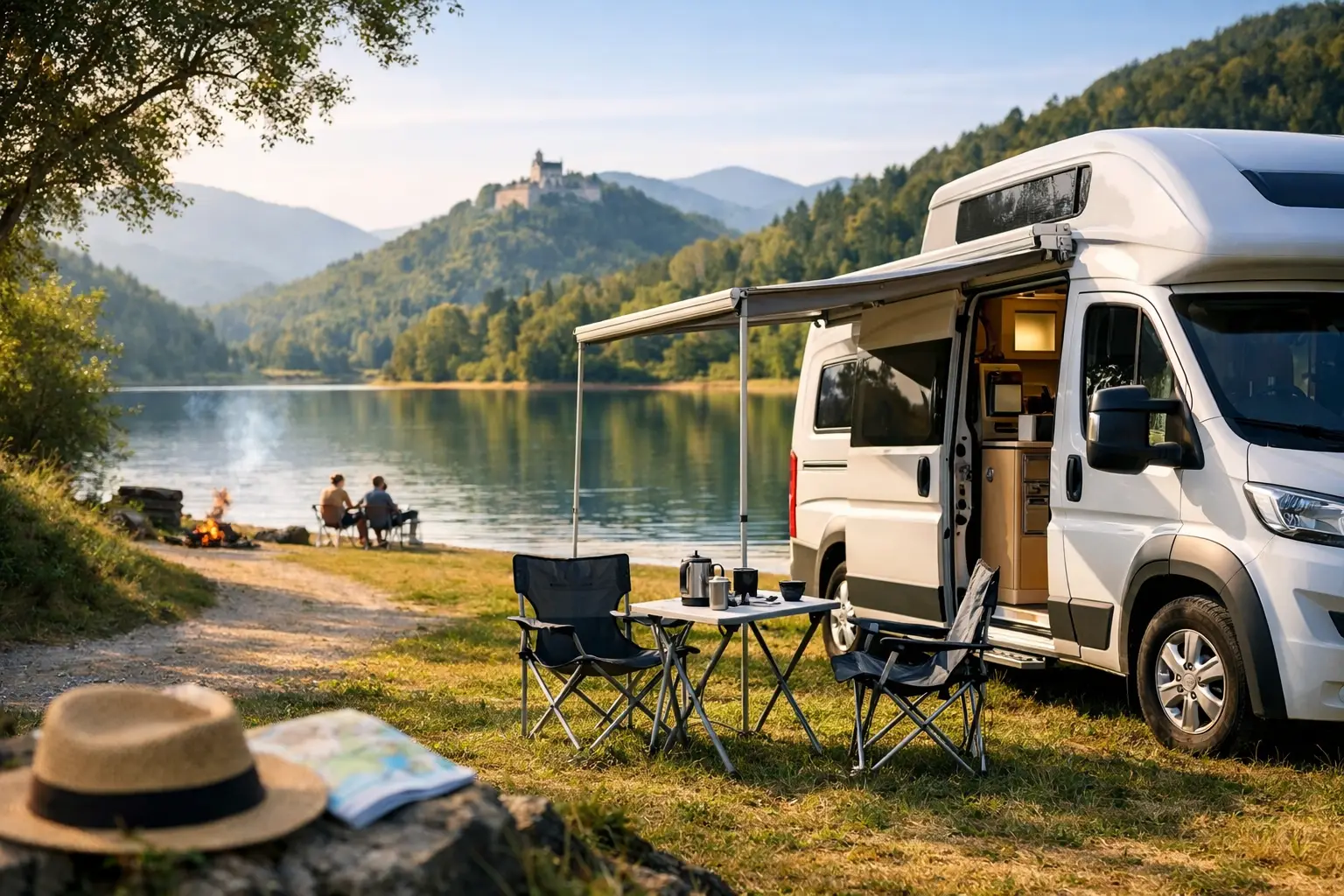
Friday lunchtime, the bags are ready, and instead of hours in traffic on the way to the airport, your holiday starts on your own doorstep. If you want to rent a camper in NRW , you are choosing exactly this freedom: set off when it suits you, stay on the road where it's lovely, and still travel in comfort. To turn a spontaneous idea into a relaxing break, what matters most is the right vehicle, realistic planning and a rental company that stays reachable.
NRW is an ideal starting point for this. From the Niederrhein, the Netherlands is quickly reached, the Eifel offers nature and quiet, and the North Sea, the Sauerland and Belgium are also within comfortable reach. Whether a long weekend or three weeks of summer holiday: with the right motorhome, the trip doesn't begin only at the destination.
Renting a camper in NRW: vehicle first, then route
The most beautiful route is of little help if the motorhome doesn't suit your travel style. That's why it pays to take an honest look at your own needs before booking. Is it a couple travelling light, wanting flexible pitches? Then a compact panel van is often the right choice. It is comparatively easy to drive, fits into many parking spaces and has everything you need for a comfortable trip.
For families, more space usually counts. A semi-integrated motorhome creates room for beds, clothes, toys and shared meals. Especially in changeable weather, a generous living area is worth its weight in gold. If you are travelling with several adults or want a lot of living comfort, you can consider a fully integrated model. It often offers a more open feeling of space, but requires a little more calm and experience when manoeuvring.
Dogs should be considered when choosing a vehicle, too. A fixed spot for blanket, bowl and lead means less restlessness on the road. Easy-to-clean areas and enough storage space are practical, so your four-legged friend doesn't have to lie between bags and camping furniture. For short stages and outings, the vehicle should also never be left standing in the sun.
Compact or spacious? This question decides a lot
Vehicle size is not a competition. A large motorhome means more freedom of movement, but can be more demanding on narrow roads, small campsites and in old town centres. A small camper is easier to drive and sometimes saves money on ferries or pitches, but offers less space to retreat to.
For beginners, a panel van or a manageable semi-integrated motorhome is often a relaxed way in. Families frequently benefit from fixed sleeping areas, so the seating area doesn't have to be converted every evening. If you spend most of your time outdoors, you need less interior space than travellers who also want to spend rainy days cosily in the vehicle.
What is really included in the price when renting a motorhome
A low daily rate alone says little about the total cost. What matters is what is included in the rental and what other expenses may arise. Depending on the trip, these include the mileage arrangement, the deposit, the final clean, the gas supply, possible additional drivers and campsite and pitch fees. Tolls, fuel and food on the road belong in the holiday budget too.
Transparent rental terms give you certainty here. Before booking, it should be clear how many free kilometres are included, how the return works and what applies in the event of damage. Travel protection can make sense if your plans change because of illness or another unforeseeable event. Whether it is worth it depends on trip length, booking value and your personal cover.
If you want to be away for longer, ask about long-term rental . It can work out better than several short individual bookings and gives you more leeway for a trip without fixed time pressure. Especially for tours through Scandinavia, France or along the Atlantic coast, it is worth looking at the terms.
The handover: the most important minutes before you start
At the handover, a motorhome becomes a home on wheels. Take your time for it, even if you are full of anticipation. Have the fresh water, waste water, toilet, heating, fridge, gas and mains hook-up explained calmly. Ask if a step doesn't stick. It is far nicer to clear up a question at the base than in the evening on a pitch in the rain.
Also get to know the vehicle's height, width and maximum permissible weight. The height belongs firmly in your head or on a small note on the dashboard. Otherwise underground car parks, branches, low bridges and some car parks quickly become a problem. As for weight: don't simply pack everything you have at home. Bikes, camping furniture, supplies and luggage add up faster than you think.
A short test drive, or at least a check of the mirrors, seating position and reversing camera, helps especially the first time. If you have never driven a motorhome, don't plan the first stage straight through a tight city centre. A calm start on country roads or the motorway takes a lot of tension out of the first kilometres.
Packing for the trip: less ballast, more holiday
In a camper, not every item needs a fixed place – but everything that comes along should have one. Heavy things belong low down and as close to the middle of the vehicle as possible. Loose items must be stowed while driving. This increases not only comfort but also safety.
Instead of filling the camper to the roof, a simple question is worthwhile: do we really need this on the road? Clothes can be washed or combined, food can be bought on the spot, and many rental vehicles already come with the essential basic equipment. What exactly is included should be checked in advance. Then you will know whether crockery, cables, levelling wedges or camping chairs are already on board.
For families, a small bag for the day of travel with snacks, drinking bottles, games and a change of clothes works well. Couples will be glad of a tidy kitchen rather than five bags of supplies. And for dogs, water, food, a towel and a familiar bed belong within reach in the vehicle.
Motorhome pitch or campsite? Both have their place
A motorhome pitch (Stellplatz) is ideal for an overnight stop or when you want to stay flexibly and close to a place. It is often cheaper and more basic. A campsite generally offers more infrastructure, such as sanitary facilities, playgrounds, laundry or direct access to the lake. For families and longer stays, that can make the decisive difference.
Free-standing sounds tempting, but is no substitute for a legal place to spend the night. Rules differ regionally, and nature reserves are not a car park. If you show consideration for residents, nature and other travellers, you travel more relaxed and help to ensure campers stay welcome everywhere. That also means: leave no rubbish behind, don't spread camping furniture out on public car parks and respect quiet hours.
A good mix makes many trips especially pleasant. One or two nights on a campsite give you the chance to shower, do laundry and refuel. In between, small pitches provide the spontaneous freedom that makes a motorhome trip so special.
Start relaxed from Kempen with Friedas Camper
At Friedas Camper, inspected vehicles, personal advice and technical expertise come together. This is especially helpful if you are renting for the first time or are still unsure about equipment and vehicle size. Instead of choosing just any motorhome, you find a model that suits your destinations, travel companions and the comfort you want.
Before setting off, it's worth outlining the planned route roughly, but not scheduling every overnight stay down to the minute. Book popular campsites in good time during holidays. Deliberately leave some breathing space between the fixed stops. A lovely lake by the roadside, a weekly market or a spot with a wide view are often the moments that stay with you from the trip.
Once the key has been handed over, not everything has to be perfectly planned. A well-prepared motorhome, enough time for the briefing and a willingness to change plans on the road are enough for a holiday that really feels like freedom.