Winterising a Motorhome: Guide in 8 Steps
The first night frost often comes faster than you think. If you simply park your motorhome after the last autumn trip, you risk frozen pipes, a weak battery and musty upholstery. With this guide to winterising a motorhome , you prepare your vehicle reliably for its time standing – so that your next trip in spring begins relaxed rather than with a workshop appointment.
Whether your motorhome stands outdoors, in a hall or under a carport makes a difference. Outdoors it needs particularly good protection from damp, frost and UV radiation. In a dry hall the conditions are better, but even there the water system and battery must not be forgotten. It also matters whether you really plan a longer break or want to keep travelling in winter.
Winterising a motorhome: guide for the time standing
It is best to start preparing as soon as no more trips are planned and night temperatures regularly head towards zero. Work in a sensible order: clean first, then drain the water, then secure the power supply, interior and exterior. That way nothing gets left out.
1. Clean and inspect the vehicle thoroughly
Before winterising, a thorough wash is worthwhile. Remove insect remains, bird droppings, tree resin and road dirt from the body, windows and especially the roof. These residues can attack paintwork and seals over months. Only clean the awning, step and bicycle carrier if everything can dry completely afterwards.
Inside, crumbs, food, drink remains and pet hair have to go. Even an opened packet of pasta can attract mice. Open cupboards, check corners under seat cushions and wipe out the fridge and freezer compartment. Then switch the fridge off, let it defrost and keep the door open in the ventilation position provided. That prevents unpleasant smells and mould.
Use the cleaning to do a quick condition check at the same time: are roof vents, window frames and seals undamaged? Are there signs of damp in cupboards or at wall joins? Small anomalies should not be put off until spring.
2. Drain fresh water, waste water and boiler completely
This is the most important step against frost damage. Water expands as it freezes and can damage pipes, fittings, pumps or the boiler. First drain the fresh water tank and the waste water tank. Then empty the boiler via the frost-protection or safety valve. On many vehicles this valve opens automatically at low temperatures – but you should not rely on that.
Then open all taps in the middle position, between hot and cold. That lets water run out of both lines. Also flush the toilet several times and, if necessary, empty the water pump filter. A little water left in a hose can already be too much in the worst case.
Depending on the model, the information in the operating manual helps, because drain valves and water routes differ. If you are unsure, or use a complex system with an external connection, filter and several tanks, it is better to have the winter draining checked. That is much cheaper than a burst boiler.
3. Prepare the toilet and drains for frost
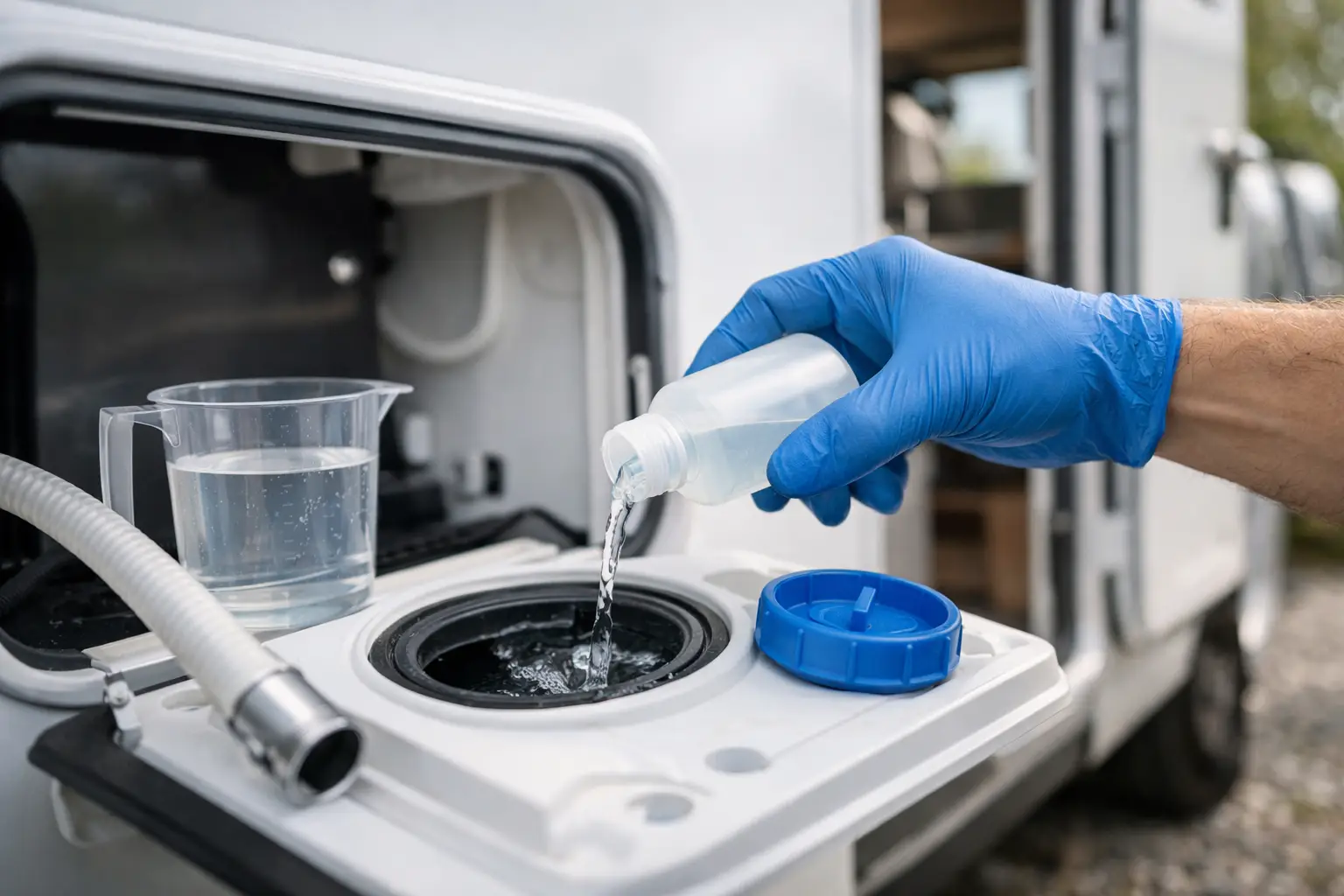
Empty and clean the cassette toilet completely. Rinse with clean water and store the cassette dry. Chemical additives do not belong in the cassette if it stays unused for months. They can put seals under strain or form residues.
A little suitable, non-toxic antifreeze for drinking-water and sanitary systems can be put into the drains of the kitchen, bathroom and shower. Ordinary car coolant is not suitable for this. It is toxic and has no place in a motorhome's water system. If you do not want to use a frost-protection solution, take particular care that traps and pipes really are empty.
4. Look after the battery properly instead of just disconnecting it
The leisure battery loses energy even when stationary. Alarm system, control panel, tracker or other consumers often draw current unnoticed. First check the state of charge. Ideal is a cool, frost-free location and regular maintenance charging with a suitable charger.
If the motorhome stands outdoors and you have mains hook-up available, maintenance charging can make sense. The condition is that the charger and battery are suitable for it. Being permanently connected to the mains is not the best solution for every older system. Without mains hook-up, the battery should be checked regularly and recharged if needed. The starter battery also needs attention, especially on modern base vehicles with many electronic systems.
Solar panels can help, but do not replace checking. In winter the days are short, the panels are often dirty and the yield is limited. A look at the battery voltage every few weeks saves a lot of trouble.
5. Shut off the gas supply safely
Turn off the gas cylinders. For a longer period standing, it makes sense to take the gas cylinders out of the gas locker and store them properly, upright and well ventilated. Whether that is permitted and practical at your pitch depends on the storage. Never leave the cylinders in living spaces, cellars or other poorly ventilated areas.
Check the gas locker for damp and dirt. The vent opening must stay clear. If the next gas inspection or a service is due, the winter break is a good time to schedule it. That way the new season starts without time pressure.
6. Protect the interior against damp and mould
A dry motorhome is a healthy motorhome. If possible, do not take mattresses and cushions completely out of the vehicle, but stand them on edge or ensure air circulation underneath. Fold up table tops, leave cupboard doors open a crack and remove damp textiles, rugs and towels.
Dehumidifiers can help, but are no substitute for a dry pitch and regular checks. Granule containers must be emptied in good time, otherwise they eventually end up standing in water themselves. Air the vehicle briefly and deliberately on dry days. Windows left permanently tilted, on the other hand, are not a good idea: they increase the risk of damp, break-ins and rain getting in.
7. Relieve tyres, brakes and the outer skin
Check the tyre pressure and, for a longer period standing, raise it slightly according to the manufacturer's specification. That reduces the risk of flat spots. If the storage location allows it, move the vehicle a short distance every few weeks or occasionally drive it until it is properly warm. Simply letting the engine run while stationary achieves little and can do more harm than good.
Do not simply release the handbrake without securing the vehicle. It is better to secure the vehicle on level ground with suitable wheel chocks and to follow the vehicle manufacturer's instructions. A breathable protective cover can make sense for an outdoor pitch if it fits precisely and does not trap moisture underneath. Cheap tarpaulins without ventilation often chafe the paintwork and promote condensation.
8. Check on it regularly
Even a well-prepared motorhome should not be left unattended for months. Drop by about every two to four weeks: check damp, battery voltage, tyre pressure and the area under the vehicle. Check that roof vents are closed, ventilation openings are clear and there are no signs of rodents.
After strong storms, snowfall or continuous rain, an additional check is worthwhile. Snow should not stay on the roof longer than necessary, because its weight and meltwater can put seals under strain. Please work safely and do not climb onto the roof if it is icy or not approved for it.
If you want to keep driving in winter
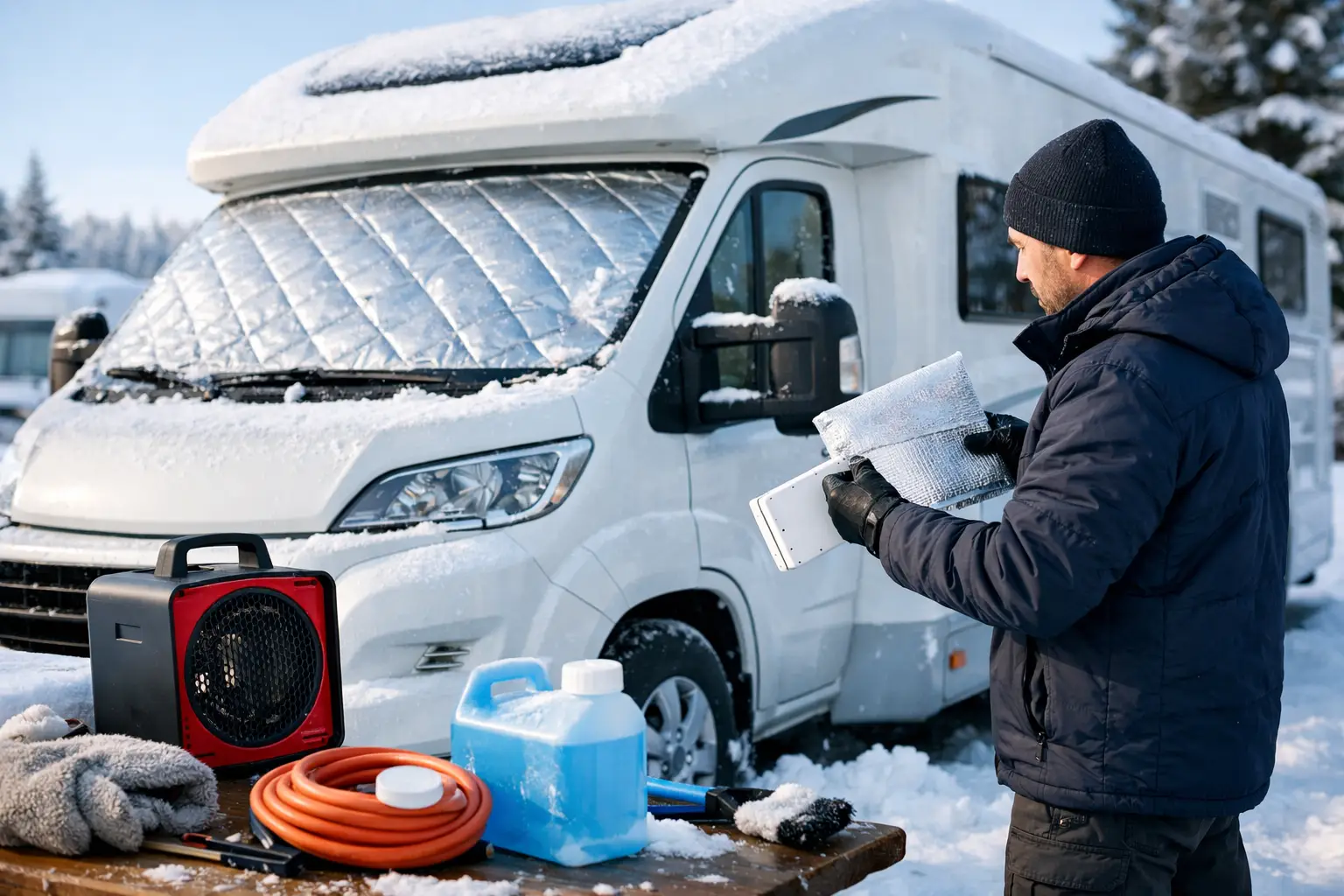
If you are planning winter camping, you of course must not shut down the water system completely. Then it is less about winterising than about frost-proof operation. A heated body, enough gas, a pitch suited to winter and a reliable battery are decisive. During breaks in driving, the heating must be set so that water pipes and the boiler stay protected.
The same applies here: the vehicle concept decides. Not every motorhome is equally well suited to prolonged sub-zero temperatures. A double floor, insulated tanks, heated pipe routes and sufficient heating output make a noticeable difference. If you are unsure, get advice before your winter trip rather than getting to know your vehicle's limits at the pitch.
At Friedas Camper in Kempen, we are happy to help with workshop service, retrofits and a checking look at the points that really count for your model. If you park your motorhome cleanly and carefully now, you create the best starting point for spring: turn the key, get in and enjoy freedom again.