Motorhome Heating Broken: What Helps Now
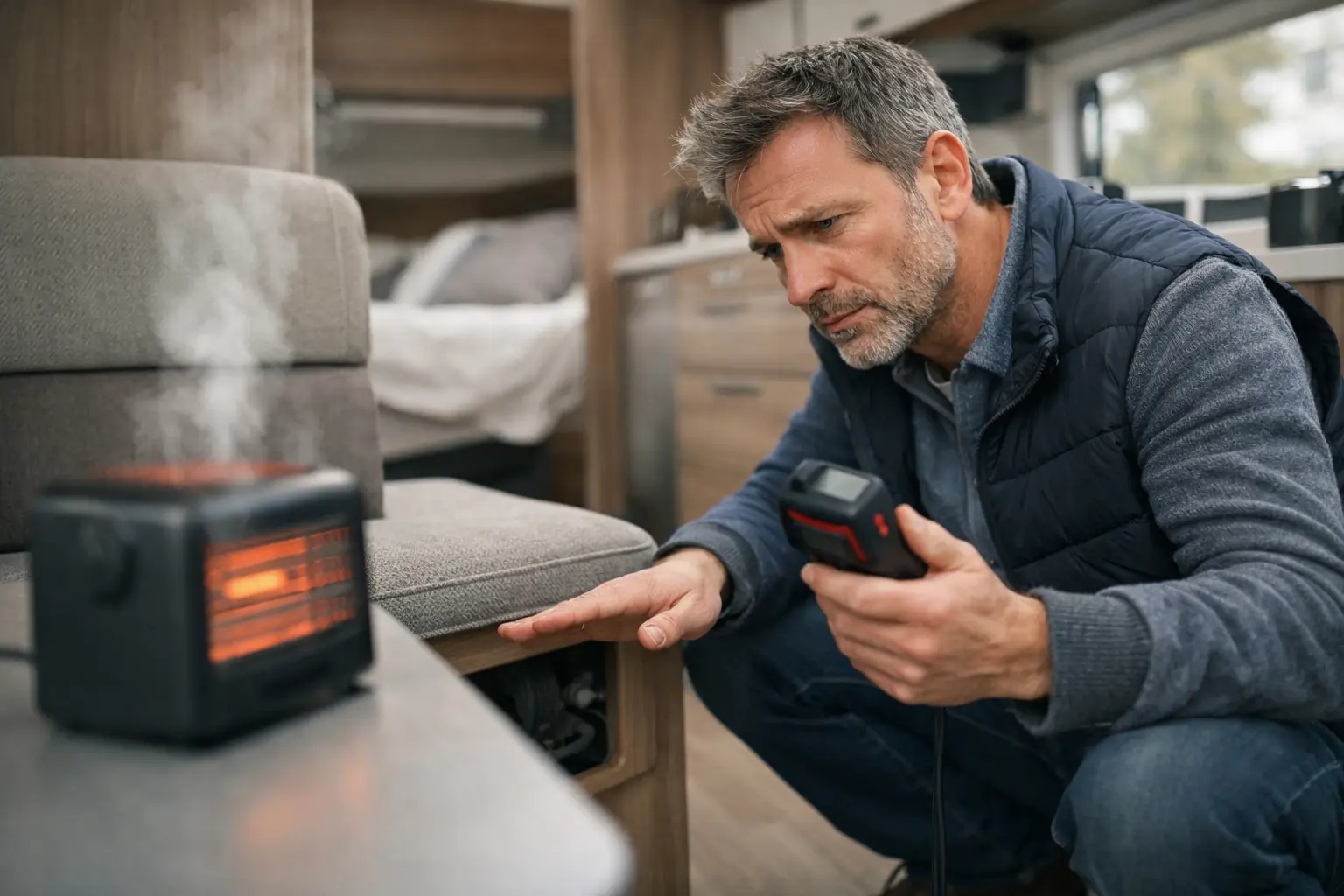
When your motorhome heating is broken , looking forward to a weekend trip can quickly turn into a cold night in the vehicle. Especially in spring, autumn or on winter trips, the heating is not a comfort extra but provides warmth, dry air and protection from frost. The good news: not every fault means major damage. A careful look at symptoms, electricity, gas and operation can narrow down a lot. If you smell gas, see error messages or have repeated failures, however, the rule is clear: do not improvise, have it checked professionally.
Motorhome heating broken: safety first, then fault-finding
Depending on the vehicle, a campervan heater runs on gas, diesel or, as a supplement, electricity. Many motorhomes use a gas heater with warm-air distribution, some newer models a diesel heater or a combined solution for heating and hot water. The cause can therefore range from an empty gas container to a faulty power supply.
If you smell gas inside or at the gas locker, immediately close the gas cylinder or gas tank. Open doors and windows, and avoid naked flames, cigarettes and electrical switches. Do not start the heating again. The same applies if a carbon monoxide alarm goes off or people get headaches, dizziness or nausea. Then only one thing counts: get out of the vehicle and arrange professional help.
Even without a smell of gas, you should not keep switching the heating on and off when it goes into fault mode. A single restart after a simple check is reasonable. If the fault occurs again, the shutdown may be protecting against a genuine defect.
These signs help you work out what is wrong
Sometimes the heating stays off completely. More often the fan starts but it does not ignite, or it starts briefly and then switches off again. Cold air from the vents, an error message on the control panel or irregular noises also give clues.
If the heating does not react at all, the suspicion often falls on the 12-volt supply, a fuse, the main switch or the control panel. If the fan runs but it does not get warm, possible causes are missing gas, a closed valve, air in the gas line or an ignition fault. If the system switches off after a few minutes, the on-board voltage may be too low, the combustion air supply may be blocked or a sensor may be detecting a fault.
With a diesel heater, the fuel level, the fuel line and a sufficiently charged leisure battery are also decisive. If the vehicle is standing at a steep angle, the supply can also be affected, depending on the tank level. So it depends on the heating system and the specific situation.
Safe checks on site
Before you call a workshop, you can check a few points. Work only on things that are possible without dismantling and without interfering with gas, fuel or exhaust lines.
First check that there is enough energy. The leisure battery display should not only look good at idle: when the heating starts, the voltage sometimes drops noticeably under load. A weak battery can mean the fan starts but the ignition process aborts. Also check the fuses according to the operating manual and whether the control panel is switched on correctly.
With a gas heater, next look at the gas supply. Is the cylinder open, the gas tank sufficiently full and the right shut-off valve open? After a cylinder change or a long period standing, there may be air in the line. On some systems the gas line must first be filled via another appliance such as the hob. Here you may proceed only according to the instructions, and never look for leaks with a flame.
It is also worth a look outside. The exhaust pipe and the intake opening must not be blocked by snow, ice, leaves, mud or a cover standing too close. Inside, too, the warm-air outlets should stay clear. Bags, dog blankets or supplies in front of the vents prevent heat distribution and can lead to overheating.
These four points are particularly often the cause:
- The gas cylinder is empty, closed or not connected properly.
- The leisure battery no longer delivers enough voltage at start-up.
- A fuse, a main switch or the control panel interrupts the supply.
- Exhaust, intake or warm-air paths are blocked.
Why the heating does not ignite despite a full gas cylinder
A full gas cylinder is no guarantee that the heating works. In the cold, liquefied gas evaporates more slowly. Butane in particular can reach its limits at low temperatures. For cold days of travel, propane or a suitable winter gas mix is the better choice. If you use a gas tank, you should also pay attention to the right gas quality there.
In addition, a regulator can cause problems, for example if it ices up, gets dirty or no longer works reliably after many years. Modern systems often have a crash sensor. If it was triggered by a strong shock, a kerb or transport, the gas supply is interrupted. Whether and how this sensor can be reset is stated in the manual of the system concerned.
Altitude also plays a role. In the mountains, a heater can work differently from on the Lower Rhine because of the thinner air. Some devices need an adjustment for this or can only be used without restriction up to a certain altitude. If you regularly travel to the Alps, you should take this into account with the vehicle and its maintenance.
Note the error message instead of guessing
If the control panel shows an error code, photograph it or note it down exactly. Include the circumstances: outside temperature, battery level, gas level, time of the fault and whether the heating had been running for a long time beforehand. This information shortens the diagnosis considerably.
If the heating no longer starts after refuelling, a cylinder change or a long drive, for example, that is a different starting point from a fault that only occurs in frost. A rattling noise can point to a problem with the fan, while repeated clicking may fit more with the ignition process. It does not replace a reliable remote diagnosis, but the observation helps the workshop.
When you should stop checking yourself
In these cases the motorhome belongs in expert hands: smell of gas, soot marks, water leaking from a combination heater, unusual exhaust noises, a triggered CO alarm or recurring faults despite a correct basic check. Work on the burner, gas pressure regulator, control unit, fuel line and exhaust system is also not a job for the pitch.
A professional check is particularly sensible if the heating runs unreliably even though gas and electricity are available. Wear parts, dirty combustion chambers, defective temperature sensors or problems in the electronics cannot be reliably spotted from outside. On vehicles with gas inspection and regular servicing, such risks can often be found early.
For campers from Kempen, Krefeld, Düsseldorf, Köln and the rest of NRW, a specialist motorhome workshop is the right point of contact. At Friedas Camper, heating problems can be examined as part of a targeted diagnosis – suited to the system and equipment of your motorhome. That is particularly sensible before a longer tour, so that your holiday does not begin with a fault message.
Keeping the heating reliable on your travels
A heater rarely fails without warning. So do not let it run for the first time on the first cold night of the year. A short function test before departure shows whether fan, ignition, hot water function and vents work as expected. At the same time, check the leisure battery and take enough gas with you in cold weather.
Keep the air paths clear and make sure that no covers or dirt block the openings outside. A test is especially worthwhile after long periods standing. If you put your motorhome away for winter, you should have the heating and the whole gas system serviced at the recommended intervals.
Warmth in the campervan means not only cosiness but also being more relaxed on the road. If the heating has been checked in good time, there is more time for the pitch with a view, the first coffee in the morning and exactly the freedom you set off for.